



Best pillows if memory foam didn't work for sleep
Introduction
If memory foam did not work for you, you are not being picky. You are getting clear feedback from your neck, shoulders, and temperature comfort. A lot of classic memory foam pillows soften with heat, sink more over the night, and can trap warmth. That combo can pull your head out of neutral and leave you with morning neck stiffness, shoulder pressure, or that "I fought my pillow all night" feeling.
The fix is usually not a different brand of the same slow-sinking foam. It is a different support method. Some pillows hold cervical alignment with a shaped profile. Others use springy fills that do not collapse under body heat. Some focus on cooling airflow so you stay in a stable, comfortable position instead of tossing to find the cold side.
This listicle is built for people who tried memory foam and did not get relief. You will see specific options, what each one does well, and who should skip it. You will also get a practical test plan so you can tell in a few nights if the pillow is helping, instead of guessing for weeks.
Why memory foam fails for some sleepers
Memory foam is pressure-relieving, but it is also temperature sensitive. It gets softer as it warms, which can reduce neck support by the middle of the night for some people. If your head sinks too far, your neck bends instead of staying neutral.
It can also feel "stuck." If you change positions, slow-response foam can resist movement and make you tense your neck and shoulders as you turn. And if you sleep warm, foam can hold heat close to your skin and push you into lighter sleep.
If any of that sounds familiar, you do not need to force memory foam to work. You need a pillow that keeps cervical alignment steady across the whole night and manages heat better.
Quick guide: pick the right pillow type after memory foam
Use this as a shortcut before you buy. Your sleep position and how your pain shows up in the morning matter more than brand names.
| Pillow type | Best for | What it fixes vs memory foam | Watch out for |
|---|---|---|---|
| Ergonomic cervical (contoured) | Back and side sleepers with neck pain | More stable neck support and clearer head placement | Needs the right loft for your shoulder width |
| Latex (solid or shredded) | People who want bounce and easier turning | Less sink, more spring, often cooler feel | Can feel firmer than expected at first |
| Buckwheat hull | Hot sleepers who want adjustable support | Strong support and excellent airflow | Noisy, heavier, very different feel |
| Down alternative (microfiber) | Stomach sleepers and people who like soft | Less "stuck" feel, easy reshaping | Can go flat without frequent refluffing |
| Water pillow | People who want tunable firmness | Adjustable support without heat-softening foam | Setup and maintenance, slosh if underfilled |
| Hybrid (foam + fiber/gel + structure) | People who want support plus plush feel | Balances pressure relief with stability | Quality varies a lot between brands |
The best pillows if memory foam didn't work (ranked list)
1) Ergonomic cervical pillow (contoured, neck-first design)
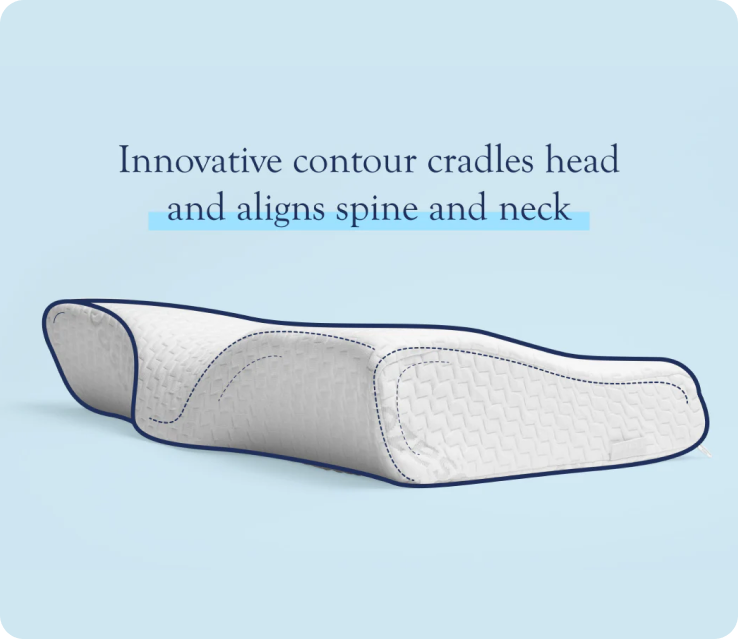
If memory foam failed because you woke up with neck pain, start here. A contoured ergonomic pillow uses a shaped profile to keep your neck supported while your head rests in a defined cradle. The goal is simple: stable cervical alignment instead of gradually sinking out of position.
What to look for: two height options or a profile that fits both back and side sleeping. For side sleepers, the outer edge should fill the space between your neck and the mattress without pushing your head up. For back sleepers, the neck roll should support the curve under your neck while keeping your chin level, not tipped down.
Dosaze angle: our customers who struggled with classic memory foam often tell us the issue was not softness, it was shape. When your pillow has a clear neck support zone, you stop "searching" for the right spot at 2 a.m. If you are unsure, the Dosaze Contour Pillow is built for ergonomic neck support and cooling comfort, with a 60-night risk-free trial and free shipping & returns, so you can test it in your real sleep conditions. If you want more help deciding between styles, read contoured pillow vs cervical pillow: what's the difference?
2) Latex pillow (solid latex for stable support)
Latex is a strong next step if memory foam felt suffocating or too slow. Latex has a springy response, so it holds you up instead of letting you melt in. That can reduce the "collapsed" feeling that shows up as neck strain by morning.
Solid latex is usually the most supportive version. It can be a good fit for combination sleepers because it responds quickly when you roll from back to side. It also tends to feel cooler than traditional foam because it does not rely on heat to soften.
Skip solid latex if you know you hate firmer pillows. In that case, consider shredded latex instead (next item) so you can adjust the feel.
3) Shredded latex pillow (adjustable loft, less sink)
If you like the idea of latex but want more customization, shredded latex is the flexible option. You can add or remove fill to match your shoulder width and sleep position. That matters because the most common reason people fail with any pillow type is wrong loft, not the material itself.
Shredded latex also moves more freely than memory foam. You can reshape it without the "stuck" resistance that makes some people tense their neck when they turn. If you alternate between side and back sleeping, this adjustability can be a real advantage.
One practical tip: after you set loft, give it three nights before you change it again. Night 1 often feels strange because your muscles are used to your old position.
4) Buckwheat pillow (maximum airflow and precise support)
Buckwheat hull pillows are the most different feel on this list. They support by stacking small hulls that lock into place. That can keep your neck very steady, and the airflow between hulls can feel noticeably cooler than foam.
This is a strong choice if you wake up hot, if you want a pillow that does not flatten, or if you want the ability to build a neck-support "ridge" that stays put. It can also be helpful if you sleep on your side and need consistent height to keep your head level.
The trade-off is real: buckwheat pillows can be noisy, heavy, and not very "cushy." If you want a plush hug, this will not feel premium to you, even if it works.
5) Down alternative pillow (for stomach sleepers and people who need low loft)
Memory foam often fails stomach sleepers because it holds the head too high. That twists the neck for hours. If you sleep mostly on your stomach, you usually need a low-loft pillow that compresses easily and does not push your head up.
A down alternative pillow can work well here because it is soft, easy to shape, and less likely to trap heat than dense foam. It is also a safer bet if you tried a contoured pillow and felt like the shape fought your face position.
Buy with eyes open: down alternative can go flat, especially if you choose a very soft fill. If you want more durability, look for a higher fill weight and plan to refluff daily.
6) Feather/down pillow (moldable support with a cooler feel)
If you want that classic hotel pillow feel but memory foam made you sweat, a feather or down pillow can be a better match. Down compresses and reshapes quickly, so you can build support where you need it without feeling trapped.
For side sleeping, it helps to choose a higher fill so the pillow does not collapse under your head. For back sleeping, a medium fill often keeps your chin from tipping down. Many people pair down with a supportive mattress topper because down alone is not structured.
Feather or down is not ideal if you need firm neck support to reduce morning pain. In that case, choose a shaped ergonomic pillow or latex.
7) Water pillow (tunable firmness night to night)
A water pillow uses a water pouch to create adjustable support. The benefit is simple: you can change firmness without buying a new pillow. If memory foam failed because it was either too high or too low, a tunable design can help you find the middle.
These can work well for back sleepers who want stable support under the neck, since water does not heat-soften the way foam does. You can often fine-tune with small changes, like adding 2-4 ounces at a time.
The downsides are also simple: you have to fill it, and if it is underfilled it can feel like it moves under you. It is also not the most premium-feeling surface unless it is paired with a comfortable top layer.
8) Hybrid pillow (structured core with a softer surface)
Hybrid pillows try to solve the main complaint about classic foam, which is the trade-off between support and comfort. A good hybrid uses a supportive core, then adds a surface layer that feels smoother and cooler. If you hated the "block of foam" feel but still need pressure relief, hybrid is worth a look.
Pay attention to the structure. Look for a clear supportive element that resists sagging, plus a breathable cover. Avoid vague marketing like "cool gel" without details. Gel can feel cool for a few minutes, but airflow and fabric usually matter more over the full night.
If you have neck pain, pick a hybrid with an ergonomic shape or a firm core. A soft, unstructured hybrid can turn into the same problem as memory foam, just with a nicer cover.
9) Adjustable loft pillow (zippered fill you can remove)
If you are not sure whether height or material was the real issue, adjustable loft pillows are a practical reset. You can remove fill until your neck feels neutral, then add a little back if you wake up with shoulder pressure. This approach is especially useful if you are between sleep positions or you change positions during the night.
The unique advantage is control. A standard pillow forces you to adapt to it. Adjustable loft lets you fit the pillow to your shoulder width and mattress firmness. On a softer mattress, you usually need slightly less loft because your shoulder sinks in more.
Make changes in small steps. Remove or add fill in handful-sized amounts, then keep it the same for a few nights so you can judge morning neck feel, not just the first impression. If you want this style with a simple way to customize height, the Dosaze Adjustable Pillow is designed for loft adjustment at home.
10) Cooling-focused pillow (breathable cover plus airflow design)
If you rejected memory foam mainly because of heat, focus on cooling first. Better temperature comfort often means fewer wake-ups, less tossing, and a more consistent head and neck position. That alone can reduce morning soreness for some people.
Look for two things: a breathable cover fabric and internal airflow. A cover can feel cool at first touch, but if the pillow core does not allow heat to move away, you will still warm up and shift positions. Materials like latex, buckwheat, and some engineered foams with ventilation channels tend to do better than dense, closed designs.
Also check your pillowcase. A thick flannel case can cancel out a cooling cover. A lighter, breathable case often makes a bigger difference than people expect.
How to tell if a new pillow is working (a 7-night test plan)
You do not need a month to get signal. You need a simple routine and a few consistent checks.
- Night 1-2: focus on comfort and pressure relief. If you feel sharp pressure on your ear, jaw, or shoulder, loft is likely wrong.
- Night 3-5: focus on morning neck and shoulder feel. You want less stiffness within 30 minutes of waking, not just "different" support.
- Night 6-7: focus on sleep continuity. If you stop flipping the pillow or searching for a spot, support and cooling are closer to right.
Track two numbers in your notes app: (1) minutes to feel "loose" in the neck after waking, and (2) number of wake-ups you remember. If either drops after a pillow change, you are moving in the right direction.
Common reasons a non-memory-foam pillow still fails
Material matters, but setup matters more than most people think.
- Loft mismatch: side sleepers on firm mattresses usually need more height than side sleepers on soft mattresses.
- Mattress is the real issue: if your shoulder cannot sink in, your neck will bend no matter what pillow you use.
- Too many pillows: stacking two pillows often flexes the neck forward.
- Old habits: if you sleep half on your pillow and half on your arm, you change the height every night.
If you are trying to reduce morning neck pain, aim for one supportive pillow and a neutral head position. Keep it boring for a week so you can read the results. For a deeper walkthrough, see how to choose the best pillow for neck pain (step-by-step).
Our recommendation if your main goal is neck support
If your top priority is reducing morning neck and shoulder pain, an ergonomic contoured pillow is the most direct answer because it is designed around cervical alignment. You want support under the neck, a stable cradle for the head, and a feel that does not change much as the pillow warms.
If you want to try a premium ergonomic option with a simple return path, the Dosaze Contour Pillow is made for neck support, pressure relief, and cooling comfort. It comes with a 60-night risk-free trial plus free shipping & returns, which directly addresses the fear of spending money and getting stuck with the wrong pillow. You can also review the full Returns Policy before you order.
FAQ
What should I use if memory foam pillows make my neck hurt?
Neck pain after using memory foam often means your head is sinking too far and your neck is bending out of neutral alignment. The best next option is usually an ergonomic contoured cervical pillow that supports the neck curve while keeping the head stable. Choose a loft that matches your sleep position, then test it for a full week so you can judge morning stiffness and not just first-night feel. If you want a more detailed breakdown, read best pillow for neck pain: a complete guide to finding relief.
Why do I sleep worse on memory foam even though it feels soft?
Softness can feel good at bedtime, but sleep quality drops if the pillow keeps changing shape as it warms and compresses. Many people sleep worse on memory foam because heat makes it soften more, which increases sink and can trap warmth against the face and neck. If you notice mid-night flipping or a "stuck" feeling when turning, try a more responsive material like latex or a pillow design with better airflow.
What pillow is best if I overheat on memory foam?
Overheating usually improves when the pillow allows airflow and does not rely on heat to conform. A latex pillow, buckwheat hull pillow, or a cooling-focused ergonomic pillow is often better than dense memory foam for temperature comfort. For a practical test, keep your room and bedding the same for three nights and change only the pillow so you can tell if cooling is the variable that fixes your wake-ups.
Is an ergonomic pillow actually better than a regular pillow for neck support?
Ergonomic pillows matter most when your pain is related to posture, because they are shaped to support cervical alignment rather than just adding softness. An ergonomic contoured pillow is often better for neck support than a regular rectangular pillow because it has a defined neck support zone and a head cradle that reduces drift during the night. The best results come when you match the contour height to your shoulder width and avoid stacking a second pillow under it.
How can I try a new pillow without risking my money?
Return friction is a real barrier because you cannot know if a pillow works from five minutes of testing. The simplest way to reduce risk is to buy from a brand that offers a real at-home trial long enough to cover an adjustment period, plus free shipping and returns. For example, Dosaze offers a 60-night risk-free trial with free shipping & returns on the Contoured Pillow, so you can test neck support and cooling across normal workdays and weekends.
Summary of top picks
- Best for neck pain after memory foam: ergonomic cervical (contoured) pillow
- Best for easy movement and less sink: solid or shredded latex
- Best for hot sleepers who want airflow: buckwheat hull pillow
- Best for stomach sleepers who need low loft: down alternative
- Best if you want adjustable firmness: water pillow or adjustable loft pillow
Conclusion and next steps
If memory foam did not work, treat that as useful information. You likely need either more stable neck support, less heat buildup, or a loft that better matches your shoulder width and sleep position.
Pick one category from this list based on your main complaint, then run the 7-night test plan without changing other variables. If your priority is cervical alignment and you want a low-risk way to test it at home, consider the Dosaze Contour Pillow for ergonomic neck support and cooling comfort, backed by a 60-night risk-free trial and free shipping & returns.


