


What pillow height helps keep your neck aligned while you sleep?
TL;DR: The right pillow height is the one that keeps your head level with your spine, so your neck stays in neutral alignment instead of bending up or down. Dosaze designs cervical and contoured pillows to cradle the neck curve for better cervical alignment, pressure relief, and comfortable support, and backs the change with a 60-night risk-free trial plus free shipping & returns.
Why pillow height matters more than softness for neck alignment
Most morning neck and shoulder pain is not about how "plush" a pillow feels. It is about whether your neck is held in a neutral position for hours.
Pillow height controls the angle of your head relative to your upper spine. Too high and your neck side-bends or flexes. Too low and your neck extends or drops, which can load the muscles around the shoulders and the base of the skull.
A practical way to think about it is this: pillow height is posture, pillow material is comfort. You need both, but posture comes first.
What "aligned" actually looks like in bed
Neck alignment is simple to picture, even if it is hard to feel at first. Your goal is neutral cervical alignment, where your nose and sternum point in the same direction and your head is not tipped.
- Side sleeping: Your neck should look like a straight continuation of your spine when viewed from behind. Your head should not tilt toward the mattress or toward the ceiling.
- Back sleeping: Your chin should not be pushed toward your chest. You want gentle neck support so the natural curve is cradled without forcing a "chin tuck."
- Stomach sleeping: Any pillow height tends to rotate your neck. If you cannot change positions yet, keep height minimal and focus on reducing twist.
This is why "loft" alone can mislead. Two pillows can have the same height on a shelf, but compress differently under your head and shoulders. The height that matters is the height after it compresses.
The easiest at-home pillow height check
You do not need a ruler. You need a repeatable check that tells you if your neck is bending.
The 30-second photo test
Lie in your usual sleep position with your usual blanket and mattress. Ask someone to take one photo from the back (for side sleeping) or from the side (for back sleeping).
- If your head is angled up, your pillow height is too high.
- If your head dips down toward the mattress, your pillow height is too low.
- If your ear sits roughly over the midpoint of your shoulder (side sleeping) and your face points straight up (back sleeping), you are close.
Do this once, then do it again after 3 nights with a new pillow. Your body often relaxes into a different position once it gets consistent neck support.
How sleep position changes the "right" height
People search for the "best pillow for neck and shoulder pain," but the better question is: best for which position and which anatomy? Pillow height needs change mainly because shoulder width and sleep position change the gap between your head and the mattress.
Side sleepers need enough height to fill the shoulder gap
On your side, your shoulder creates a larger distance from the mattress to your neck. If the pillow does not fill that space, your head drops and the upper trapezius and neck muscles can stay switched on all night.
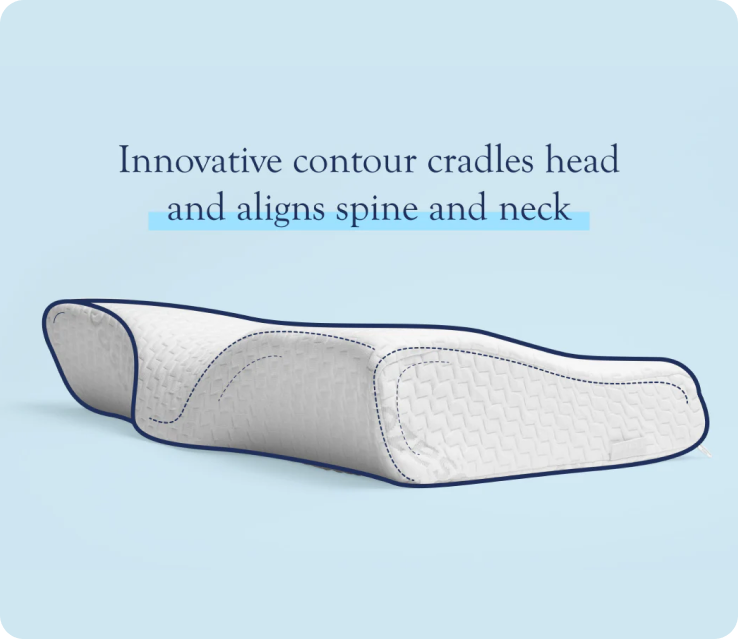
This is where ergonomic contouring helps. A contoured shape can support the neck while letting the head settle slightly lower, which often feels more natural than a tall block of foam. If you want a deeper breakdown, see this side-sleeper pillow guide.
Back sleepers need moderate height plus neck support
On your back, too much height tends to push your head forward. Too little height lets the neck flatten and can feel like you are "falling back" through your shoulders.
A cervical design is often the cleanest solution because it cradles the natural curvature of your neck rather than propping up the back of your head.
Stomach sleepers usually do best with minimal height
Stomach sleeping rotates your neck to breathe. A higher pillow increases that rotation. If you are working on changing positions, start by using the lowest setup that still feels comfortable, then gradually move toward side sleeping with supportive alignment.
A Dosaze-specific take on pillow height that most guides miss
Most pillow-height articles treat your head like the only load. In real life, your pillow has to manage a moving system: your head, your neck curve, and your shoulder position as you roll and settle.
Dosaze focuses on where support is applied, not just how much. A well-shaped cervical zone can keep cervical alignment even when the pillow does not feel "tall." That matters for people who hate the sensation of a high pillow but still wake up with neck and shoulder pain.
This is also why some people feel worse on a very fluffy pillow. It can feel comfortable at first, then compress unevenly as you relax, which changes height through the night. Ergonomic memory foam tends to be more consistent for neck support. If you are deciding between shapes, this contoured pillow vs cervical pillow comparison can help.
Which Dosaze pillow profile fits your needs
If your goal is better sleep quality and less morning neck or shoulder pain, start with a pillow shape that matches how you sleep. Both options below are engineered around cervical alignment and neck support, and Dosaze backs the decision with a 60-night risk-free trial and free shipping & returns.
| Product | Best for | Design focus | What to expect in feel |
|---|---|---|---|
| Cervical Orthopedic Pillow by Dosaze™ | Back and side sleepers who want targeted neck support | Cradles the natural curvature of your neck and supports cervical alignment (C1-C7) | More structured support under the neck, with the head resting in a stable position |
| The Original Contoured Orthopedic Pillow | Back, side, and stomach sleepers who want ergonomic contouring | Cradles the neck curve for spinal alignment and pressure relief using premium memory foam | Ergonomic contours that guide head and neck into a repeatable posture |
If you are choosing between the two and your main complaint is "my neck feels unsupported," the Cervical Orthopedic Pillow by Dosaze™ is the more direct match. If your complaint is "my shoulders feel loaded and I keep changing positions," The Original Contoured Orthopedic Pillow often fits better because it is designed to work with side, stomach, and back sleepers. If you want a version made specifically for side sleeping, consider the Dosaze Contoured Orthopedic Side Sleeper Pillow.
Where to start if you feel stuck
If you have tried multiple pillows and nothing seems to help, simplify the process. You are testing one variable: pillow height as it compresses under you.
- Pick one main sleep position you want to support first. Most people default to side or back once their neck stops hurting.
- Choose an ergonomic shape that supports the neck curve instead of only lifting the head.
- Run a 7-night "same setup" test: same pillow, same side of the bed, same mattress topper (if you use one). Consistency helps you notice what is changing.
- Track one simple outcome: when you wake up, is your neck more stiff, less stiff, or the same?
This is also where Dosaze's 60-night risk-free trial and free shipping & returns reduce the biggest anxiety: spending money and getting no improvement. You need enough nights to let your muscles stop guarding and to judge the pillow fairly.
Common pillow-height mistakes that cause neck and shoulder pain
These are patterns we see over and over from people who are actively searching for the best pillow for neck and shoulder pain.
- Choosing height based on how it looks, not how it compresses. A pillow that looks "medium" can become very low once you sink in.
- Ignoring shoulder width. Broad-shouldered side sleepers often need a setup that fills the shoulder-to-neck gap, or the neck will side-bend.
- Stacking pillows. Stacking can create a steep angle that forces the chin down and tightens the front of the neck.
- Using the wrong support zone. If your head is on the highest part of a contour when your neck needs it, you end up propping the skull and leaving the neck unsupported.
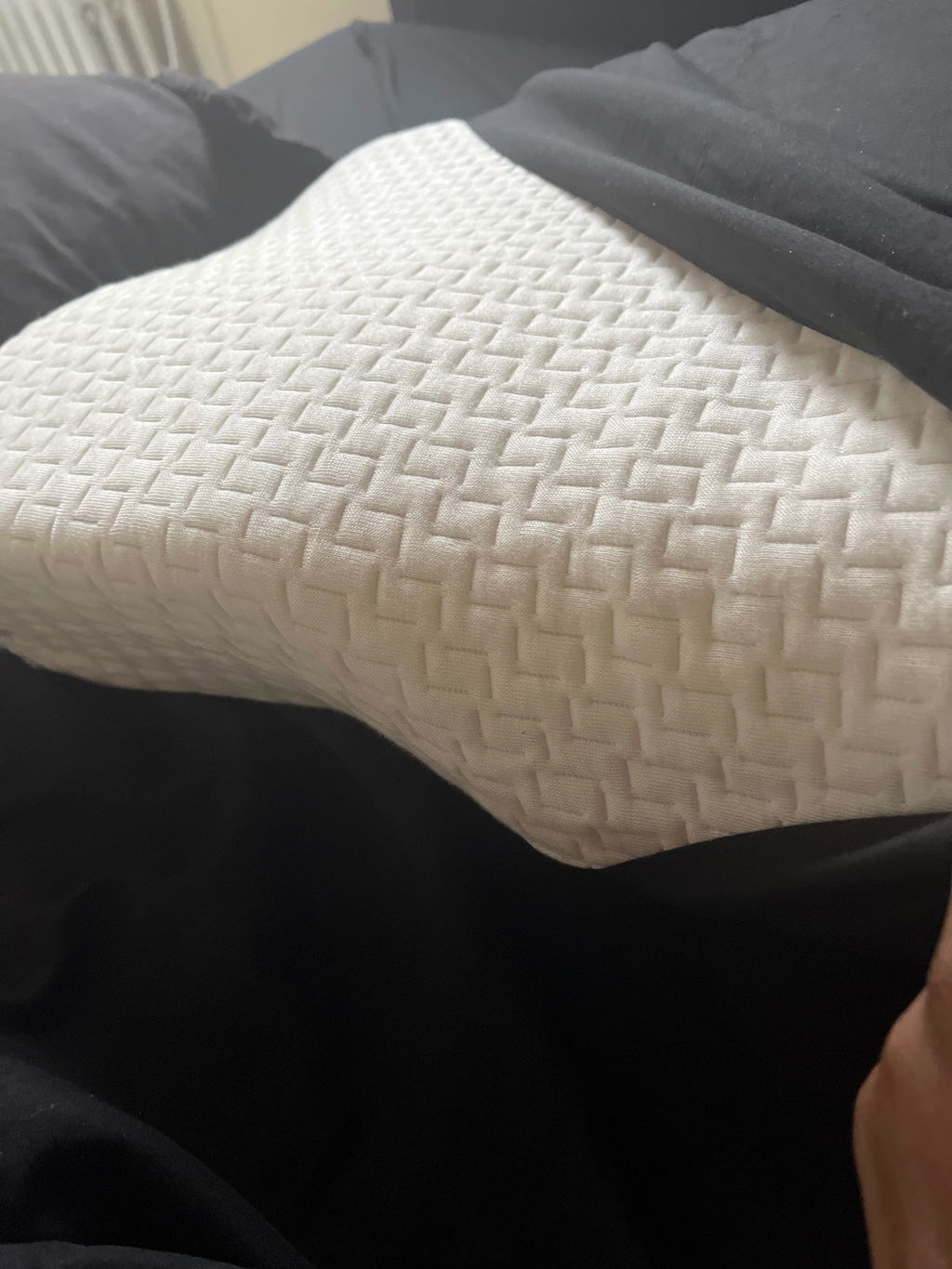
A quick fix is to reposition before you replace. On a contoured pillow, your neck should sit in the supportive curve and your head should rest in the lower cradle.
How to tell if your pillow is too high or too low
Your body gives consistent signals. You can use them to adjust pillow height without overthinking.
| Signal | More likely too high | More likely too low |
|---|---|---|
| Where you feel pain | Base of skull, side of neck, jaw tension | Front of neck strain, upper traps, "hanging head" feeling |
| Sleep behavior | You kick the pillow away or slide down it | You bunch the pillow up or put an arm under your head |
| Morning posture | Chin feels tucked, neck feels jammed | Neck feels flat or overstretched |
If you wake up and immediately stretch your neck to "undo" a bend, that is usually a height issue. If you wake up sore across the top of your shoulders, it is often a side-sleeping gap issue.
How to adjust pillow height without buying another pillow
Sometimes the pillow is close, but not right yet. Before you give up, try these small changes for 3 nights each.
- Adjust your pillow placement. Move your body so your neck sits in the support zone and your head sits in the cradle.
- Change blanket thickness under your shoulder. A thick comforter can lift your shoulder and change the effective height.
- Stop stacking. If you need more height, a better path is a pillow designed for cervical alignment, not two pillows fighting each other.
If you are trialing an ergonomic pillow and the first two nights feel "different," that can be normal. Your neck muscles have been compensating. Give it a fair run, then use your photo test again.
How long it should take to feel a difference
Some people notice a change in morning stiffness quickly, especially if their old pillow was clearly too high or too low. Others need more time because the neck and shoulder muscles have been bracing for months or years.
Dosaze includes a 60-night risk-free trial because alignment changes are not always obvious in 48 hours. The goal is not perfection on night one. It is fewer wake-ups, easier breathing, and less neck and shoulder pain when you get out of bed.
FAQ
What pillow height is best for neck and shoulder pain?
Neck and shoulder pain often comes from a pillow that lets your head tilt up or down for hours. The best pillow height is the one that keeps your head level with your spine and supports the neck curve, and Dosaze designs its ergonomic pillows around cervical alignment instead of just adding loft. If you are unsure, take a quick side-sleeping photo to check whether your head is dipping toward the mattress or tipping toward the ceiling.
How do I know if my pillow is too high?
A pillow that is too high usually pushes your head out of neutral alignment and can leave you waking with a stiff neck or tension near the base of the skull. Dosaze sees this most often when people stack pillows or choose a tall pillow to feel "supported," then end up with the chin angled down. A simple test is whether you slide off the pillow at night, that is often your body trying to escape the angle.
How do I know if my pillow is too low?
A pillow that is too low often lets your head fall toward the mattress, which can strain the neck and load the top of the shoulders. With side sleeping, this looks like your ear drifting closer to the mattress instead of lining up with your spine, and Dosaze recommends checking this with a photo rather than guessing by feel. If you keep putting an arm under your head, that is another common sign you are trying to add height.
Is a contoured pillow better than a regular pillow for cervical alignment?
Contour helps when the problem is not just height, but where support lands along your neck and head. Dosaze's Original Contoured Orthopedic Pillow is shaped to cradle the natural curvature of your neck for spinal alignment, which can reduce the "floating neck" feeling people get on flat pillows. If your neck needs more direct support, a cervical profile may feel more stable under the neck than a traditional rectangle. For a deeper comparison, read Contoured Pillow Vs Cervical Pillow Whats The Difference.
What if I switch sleep positions during the night?
Changing positions is normal, so the pillow has to keep you close to neutral alignment in more than one posture. Dosaze designed The Original Contoured Orthopedic Pillow to work with side, stomach, and back sleepers, which is useful if you start on your side and wake on your back. The practical step is to choose the position you spend the most time in, then judge whether you wake with less neck and shoulder pain over a full week.
How long should I try a new pillow before deciding it is not for me?
Your neck and shoulders may need time to stop compensating once you get consistent support. Dosaze offers a 60-night risk-free trial with free shipping & returns so you can assess alignment and comfort over enough nights to notice a real pattern. Take a photo on night one and again after a week, it can show posture changes you do not feel in the moment. If you are still troubleshooting, Dosaze Contour Pillow FAQ covers practical details like dimensions, care, shipping, and returns.
Can a pillow fix shoulder pain if the problem is my mattress?
A pillow can improve neck support and cervical alignment, but shoulder pressure often comes from the mattress pushing up into the shoulder on your side. Dosaze pillows focus on neck support and pressure relief at the head and neck, so if your shoulder still feels pinched, try adjusting your side-sleeping posture or testing a slightly different pillow profile. The quickest clue is whether your neck feels better but your shoulder still feels compressed, that points to the mattress layer as the remaining issue.
Your next step: pick a posture goal and test height the smart way
Decide whether your main goal is side-sleeping alignment or back-sleeping cervical alignment, then choose a pillow shape that matches it. If you want targeted neck support, start with the Cervical Orthopedic Pillow by Dosaze™. If you want ergonomic support across multiple positions, start with The Original Contoured Orthopedic Pillow.
Take one quick photo tonight, then commit to a consistent 7-night test. With Dosaze's 60-night risk-free trial and free shipping & returns, you can focus on results, not return stress.