



Best Mattress for Spine Pain: Match It to Where It Hurts
The best mattress for spine pain keeps your whole spine in a roughly straight line in the position you sleep in. It has to be firm enough under the hips that your midsection doesn't sag, and soft enough at the shoulders and hips that they can sink in a little. For most people that means a medium to medium-firm mattress. A zoned hybrid (pocketed coils with a firmer middle section, under a pressure-relieving comfort layer) is the type that handles both jobs most reliably. The right firmness and type for you depend on where along your spine it hurts and how you sleep.
Start with where along your spine it hurts
"Spine pain" covers three fairly different areas, and a mattress affects each one in its own way.
Neck
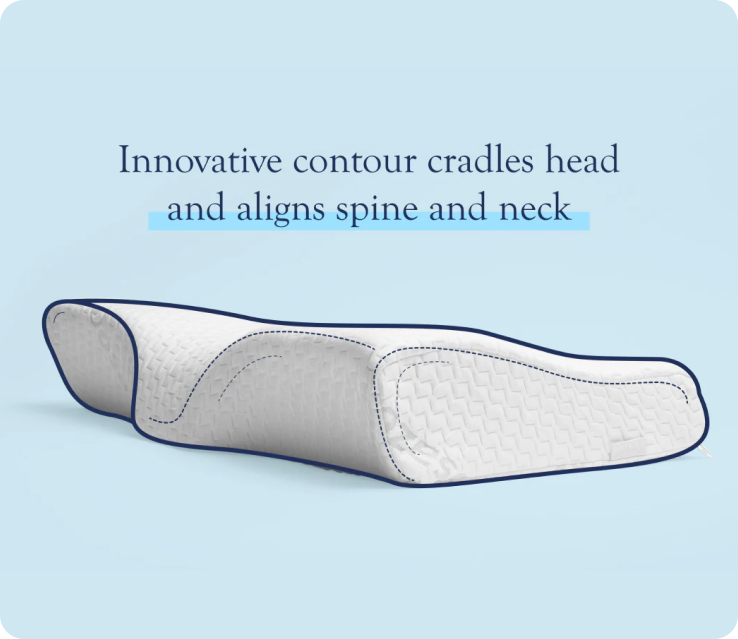
Neck pain is often more of a pillow problem than a mattress problem. The mattress matters in one specific way: how far your shoulder sinks. On a very firm bed, a side sleeper's shoulder stays high and the pillow that used to fit is suddenly too thin, so the head tips down toward the mattress. On a very soft bed the opposite happens. If your neck is the main complaint, check your pillow height before you replace a mattress that is otherwise fine.
Mid and upper back
Stiffness between the shoulder blades tends to come from pressure rather than sag. The ribcage and shoulder blades rest on a surface that pushes back too hard, and you wake up feeling tight across the upper back. A thicker or more yielding comfort layer helps here, and side sleepers feel the difference most.
Lower back
This is where sag shows up. The hips and pelvis are the heaviest part of most bodies, so on a mattress with the same support everywhere they sink deepest and the lower spine bends into a curve. Dosaze calls this shape the "reverse rainbow": midsection low, head and feet higher. Back and stomach sleepers are most exposed to it, and a mattress that has softened over the years makes it worse.
What to look for
- Firmness matched to your body weight. A person under about 130 pounds feels the same mattress as firmer than someone over about 230 pounds does, because they press into it less.
- Zoned support, meaning a firmer section under the hips and softer sections under the shoulders and legs. This is the most direct fix for lower back sag.
- A comfort layer that relieves pressure at the shoulders and hips without letting you sink so far that support from below stops mattering.
- Enough responsiveness to change position easily. If you shift between back and side through the night, a slow foam that holds your shape can make each turn harder.
- A sleep trial long enough to judge. Your body needs a few weeks to adjust to a new surface.
Firmness by sleep position
| Sleep position | Where the spine goes wrong | Firmness that usually suits |
|---|---|---|
| Back | Hips sink and the lower back loses its natural curve, or a too-firm bed leaves a gap under the lower back | Medium-firm |
| Side | Shoulder and hip can't sink, so the spine bows upward in the middle | Medium, with a deeper comfort layer |
| Stomach | Hips drop and the lower back over-arches | Firm to medium-firm |
| Combination | Any of the above, depending on the hour | Medium-firm with a responsive top |
Mattress types compared
| Type | How it supports you | Often suits | Watch for |
|---|---|---|---|
| Memory foam | Slow, close contouring that spreads out pressure | Side sleepers, couples bothered by motion | Softer models can let heavy hips sink; some sleepers find it warm or hard to turn over on |
| Latex | Springy, buoyant push-back | Combination sleepers who move a lot | Heavy to move, and the bounce isn't for everyone |
| Innerspring (open coil) | Connected coils with a thin top layer | Stomach sleepers, tighter budgets | Limited pressure relief at the shoulders; quality varies widely |
| Hybrid (pocketed coils plus comfort layer) | Individual coils for support, foam or other material on top for pressure relief; can be zoned | Most types of spine pain and most sleep positions | Builds differ a lot, so check whether the coils are zoned |
| Adjustable air | Air chambers you can firm up or soften | Couples who want different firmness on each side | More parts, and the comfort layer above the air can be thin |
No type is right for everyone. But if your pain sits in more than one part of your spine, or you switch positions, a zoned hybrid covers the most ground because it separates the two jobs: coils hold the hips up, the top layer lets the shoulders in.
Where Dosaze fits
All three mattresses in the Dosaze mattress collection are hybrids built on OrthoFlex Tri-Zone Coils. These are individually wrapped coils split into zones, with the middle third (where your body is heaviest) made slightly firmer to stop the reverse rainbow. They differ in the top layer and the feel.
The DreamAlign Hybrid puts Dosaze's AirFoam over the zoned coils. AirFoam is designed to relieve pressure along seven areas of the legs, torso and shoulders, so this one makes sense if your lower back aches and you also wake up with sore shoulders or hips. Back and side sleepers are the natural fit.
If you sleep on your stomach, carry more weight, or have felt yourself sinking into every mattress you've owned, look at the DreamAlign Hybrid Firm. It has the same zoned coils and AirFoam with a firmer feel. A lighter side sleeper may find it too firm at the shoulder, which can push the problem up toward the neck.
The DreamAlign Pro swaps the foam top for Dosaze's patented Gel Grid on top of the same Tri-Zone Coils. Dosaze designed it for back, side and stomach sleepers, so it's the one to consider if you can't predict which position you'll wake up in, or if two people with different habits share the bed.
When Dosaze isn't the right pick
- You want the slow, deep hug of an all-foam memory foam bed. Dosaze mattresses are hybrids and feel more supportive from below.
- You and your partner need very different firmness on each side. Adjustable air beds, such as those from Sleep Number, are built for that.
- Your mattress is fairly new, has no dips, and just feels too hard at the shoulders. A mattress topper costs less and may be enough. (A topper won't fix a mattress that already sags, though.)
- Your pain runs down an arm or leg, comes with numbness, or started after an injury. Talk to a doctor. A mattress affects how you lie at night, and that's all it does.
Give a new mattress a fair trial
Expect some odd mornings in the first couple of weeks while your body gets used to a different surface. Keep track of the pattern rather than any single night: stiffness that eases within half an hour of getting up is a different signal from pain that builds through the night. Dosaze mattresses come with a 60-night sleep trial, and the details on returns are on our FAQ page.
Frequently asked questions
Is a firm or soft mattress better for spine pain?
Most people with spine pain do best on medium to medium-firm. A mattress that is too soft lets the hips sink and bends the lower spine, while one that is too firm presses on the shoulders and hips and can leave a gap under the lower back. Heavier people and stomach sleepers usually need the firmer end of that range, and lighter side sleepers the softer end.
Can an old mattress cause spine pain?
A mattress that has developed dips or lost its support can contribute to morning stiffness, especially in the lower back. It is rarely the only cause, so posture, activity and injuries matter too. If you can see a body impression or feel yourself rolling into the middle, the mattress is worth replacing.
Are hybrid mattresses good for spine pain?
Hybrids suit many people with spine pain because the coils supply support underneath while the top layer handles pressure relief. Zoned hybrids, with firmer coils under the hips, are aimed at keeping the lower back from sagging. Builds vary a lot, so check whether the coils are zoned and how thick the comfort layer is.
What is the best sleeping position for spine pain?
Back and side sleeping are usually easiest on the spine. Stomach sleeping tends to over-arch the lower back and twist the neck. Side sleepers can put a pillow between the knees to keep the hips level, and back sleepers can put one under the knees to ease pressure on the lower back.
How long does it take to adjust to a new mattress?
Most people need a few weeks, and some stiffness early on is common. Judge by the trend over that time rather than a single night. Dosaze mattresses come with a 60-night sleep trial, which leaves room for the adjustment period.


