



Firmest pillow: which types are hardest and who needs one
The firmest pillows are buckwheat hull pillows and solid blocks of latex or dense memory foam. Shredded foam pillows come close when they are packed full, and they have one advantage over the others: you can add or remove fill until the firmness is right. Polyester fiber and down are at the soft end and get softer as they age. The firmest pillow is not automatically the best one for you, though. What you want is a pillow firm enough to hold your head at the right height all night without collapsing, and that depends a lot on how you sleep.
What makes a pillow feel firm
Three things decide it. The first is the fill material: hulls, latex and dense foam resist compression, while fibers and feathers squash flat under the weight of a head. The second is how much fill is packed into the cover. An overstuffed shredded foam pillow can feel harder than a solid foam pillow of the same size.
The third is loft, which people often mix up with firmness. Loft is height. A thin, hard pillow and a tall, hard pillow are both firm, but they put your neck in very different positions. If you are shopping for a firm pillow because yours keeps going flat, you probably need a firmer pillow at the same height. If your head sinks toward the mattress, you may need more loft as well.
Temperature matters with memory foam. It softens as it warms, so a memory foam pillow feels firmer in a cool bedroom and gives more once your head has been on it for a while.
The firmest pillow types compared
| Fill | How firm | Stays firm over time? | Adjustable? | Main downside |
|---|---|---|---|---|
| Buckwheat hulls | Very firm, holds the shape you press into it | Yes, hulls don't compress much | Yes, remove hulls | Heavy, and the hulls rustle when you move |
| Solid latex | Firm with a springy push back | Yes | No | One fixed height; Dunlop latex is denser than Talalay |
| Solid memory foam (loaf or contoured) | Medium firm to firm, slow to sink | Yes, if the foam is good quality | No | Softens with body heat; fixed height |
| Shredded memory foam, packed full | Medium to firm, depends on how much fill | Mostly, fluff it regularly | Yes, add or remove foam | Takes some trial to get right |
| Polyester fiber or down | Soft to medium | No, flattens with use | Rarely | Needs constant fluffing |
Buckwheat hulls
If you want the hardest pillow you can buy, this is usually it. Hulls lock together around your head and stay put, so the pillow does not spring back at you the way latex does. Brands such as Hullo have made buckwheat pillows familiar in the US. People either love the feel or find it like sleeping on a beanbag full of gravel, and the crunching sound bothers light sleepers.
Solid latex
Latex is firm and buoyant. Your head stays on top rather than sinking in. It holds its height for years, which makes it a good choice for someone tired of pillows that flatten. The catch is that you get one loft, and if it's wrong for your shoulders there is nothing to adjust.
Solid and contoured memory foam
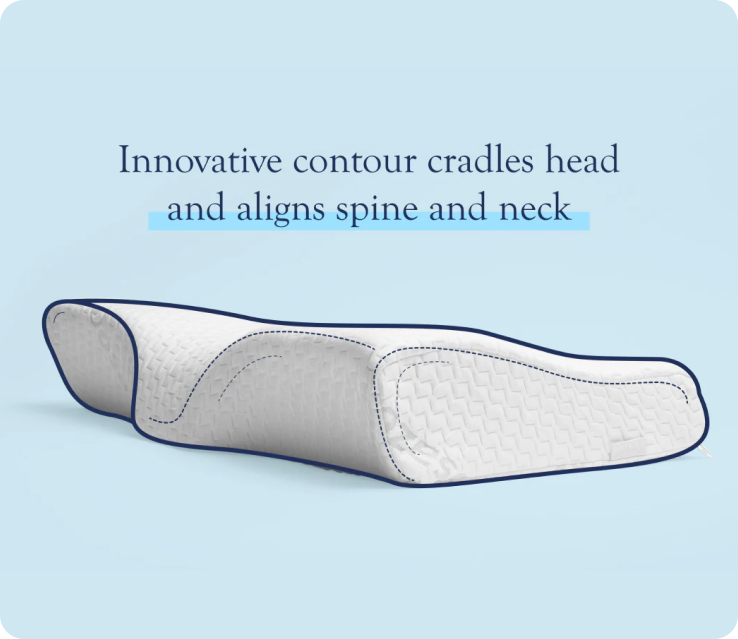
A block of memory foam supports evenly and slowly, so it feels firm at first touch and settles as it warms. Contoured versions add a raised edge under the neck and a dip for the head. Many people who search for a firm pillow are really after this: something that holds the neck up instead of letting it sag.
Packed shredded foam
Shredded foam is as firm as you make it. Fill the cover tight and it gets close to solid foam; take some out and it softens. This is the most forgiving option if you are not sure how firm you actually want to go.
How firm should you go for your sleep position
- Side sleepers usually do best with the firmest, highest pillows, because the gap between ear and shoulder is the widest. A soft pillow lets the head drop and bends the neck sideways.
- Back sleepers tend to want medium firm at a moderate height. Too hard and too tall pushes the chin toward the chest.
- Stomach sleepers rarely suit a very firm pillow. A thick, hard pillow turns the neck upward while it is already twisted to one side, so a thin, softer pillow (or a firm one with most of the fill removed) is the safer bet.
- Combination sleepers often end up happiest with an adjustable fill, since a fixed block that suits one position will be wrong for another.
Signs your pillow is too firm
A pillow can be too hard. Watch for pressure soreness on the ear or cheek, waking with the neck stiff on one side, or a feeling that your head is propped up and tilted rather than resting level with your spine. If you lie on your side and your nose points up toward the ceiling, the pillow is too high or too stiff, or both.
On the other side, a pillow that is too soft shows itself when you fold it in half and it stays folded, or when you wake with your arm shoved under it to hold your head up.
Where Dosaze fits, and where it doesn't
Dosaze does not sell buckwheat or solid latex pillows. If you want the hardest possible feel, one of those is a better place to start. What we make are memory foam pillows, and a few of them suit people looking for a firmer pillow.
The Dosaze ThermaCool Adjustable Pillow is the closest match for this search. It pairs a ventilated gel core with an adjustable cooling fill, and the fill is what gives you control over firmness, from fuller and firmer to lower and softer. It is designed for side, back and stomach sleepers, so a stomach sleeper can take fill out while a side sleeper keeps it packed.
The Dosaze Adjustable Pillow uses gel-infused shredded memory foam with no polyester fill, and extra foam comes with every pillow. That extra foam matters if you want it firmer than it arrives: pack it in. It is a queen size, 18 by 26 inches, and made in the USA.
If your search for firm is really about neck support, the Dosaze Contoured Orthopedic Pillow is a solid memory foam pillow shaped to cradle the curve of the neck and promote spinal alignment. It works for side, stomach and back sleepers. It is a fixed shape, so you can't make it firmer or lower.
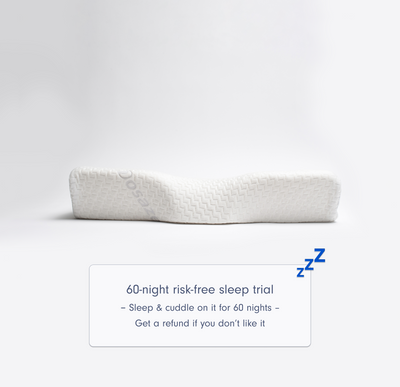
You can see every option side by side in our pillows collection. And because firmness is personal, check the 60-night sleep trial details before you buy, so you know a pillow that turns out too hard or too soft isn't a dead end.
Getting an adjustable pillow as firm as possible
Add all the spare fill, then zip the cover and work the foam into the corners by hand so there are no slack pockets. Fluff it every few days, since shredded foam slowly packs down in one spot where your head rests. If it still feels softer than you'd like at night, try a cooler room: memory foam stays firmer when it isn't warmed up.
Frequently asked questions
What is the firmest type of pillow?
Buckwheat hull pillows are generally the firmest, followed by solid latex and dense memory foam. Shredded foam can get close when the cover is packed full. Polyester fiber and down are the least firm and soften further with use.
Is a firm pillow better for neck pain?
Not always. A pillow should hold your head level with your spine, and for some people that means firm and for others medium. Side sleepers often need a firmer, higher pillow, while stomach sleepers usually need something thinner and softer.
Can I make my pillow firmer?
If it has adjustable fill, add more and pack it tightly into the corners. Some adjustable pillows, like the Dosaze Adjustable Pillow, come with extra foam for this. With a fixed pillow, a firmer pillowcase won't change much, so replacing it is usually the only real fix.
Why does my memory foam pillow feel softer at night?
Memory foam softens as it warms from your body heat. A cooler bedroom keeps it feeling firmer, and pillows with cooling gel or ventilated cores warm up more slowly.
How do I know if my pillow is too firm?
Signs include ear or cheek pressure, a stiff neck on one side in the morning, or your head tilting up instead of resting level. If your nose points toward the ceiling when you lie on your side, the pillow is likely too high or too stiff.


