



Foam wedge pillow for reflux: a buying guide
A foam wedge pillow for reflux is a firm, sloped block of foam that lifts your head and upper chest so your throat sits higher than your stomach while you sleep. That slope makes it harder for stomach acid to travel upward when you lie down, which is why wedges are a common suggestion for nighttime heartburn and GERD. Four things decide whether a particular wedge will work for you: its height, how far the slope runs down your back, how firm the foam is, and whether it sleeps hot.
A wedge is a sleep position aid, not a treatment. If reflux wakes you often, or you have trouble swallowing, chest pain or symptoms that don't ease, see a doctor. A wedge can sit alongside whatever they suggest.
Why a wedge instead of a stack of pillows
Piling two or three regular pillows raises your head but leaves your torso flat. You end up bent at the neck or at the waist, and bending at the waist presses on your stomach, which is the opposite of what you want. Pillows also shift and compress through the night, so the height you had at 11 pm is mostly gone by 3 am.
A foam wedge holds one steady incline from around your mid-back up to your head. Your esophagus stays above your stomach along the whole slope, and the foam doesn't slide apart when you turn over.
What to look for in a foam wedge for reflux
Height
Wedges are sold from about 7 inches tall up to 12 inches or more. For reflux, 7 to 8 inches is a common starting point: high enough to make a difference, low enough that most people can still fall asleep. Taller wedges put you closer to sitting up. Some people with strong symptoms prefer that, and plenty of others find it impossible to sleep on. If you're unsure, start lower. You can add a little height with a thin pillow on top, but you can't take height away.
Length of the slope
Height alone doesn't tell you the angle. A 7-inch wedge that runs 24 inches long gives a gentler slope than a 7-inch wedge that runs 20 inches. Longer slopes also support more of your back, so your hips don't become the hinge point and you're less likely to fold in the middle. Check the length on any listing before you buy.
Foam and firmness
Most wedges are built in layers, with a dense base foam that keeps its shape and a memory foam layer on top for comfort. An all-soft wedge sinks under your shoulders and quietly loses some of its height. One that's too hard feels like lying on a ramp. A firm base with a softer top is the usual compromise. Look for CertiPUR-US certification, which covers how the foam is made and tested for certain chemicals and emissions.
Heat
Memory foam holds body heat, and on a wedge far more of your back is pressed against it than on a normal pillow. Gel layers and moisture-wicking covers help. If you already wake up warm, treat cooling as a requirement rather than a bonus.
Cover
The foam itself can't go in the washing machine, so the cover is what keeps a wedge clean. You'll have your back against it for hours every night. A removable, washable cover matters more here than on almost any other pillow.
Width and sleeping position
Back sleepers have the easiest time on a wedge. Side sleepers can use one, but a narrow wedge leaves your shoulder and hip hanging off the edge when you roll, and you tend to slide off the slope. A wedge at least as wide as a standard pillow gives you room to turn. If you sleep on your side, try the left side first; many people with reflux find it more comfortable. Stomach sleepers usually don't get on with wedges at all.
Foam wedge vs other ways to raise your head
| Option | What it raises | Good points | Drawbacks |
|---|---|---|---|
| Foam wedge pillow | Your upper body, on top of the mattress | Easy to try, only affects your side of the bed, doubles as a backrest for reading | One fixed height; some people slide down it overnight |
| Stacked pillows | Your head and neck only | You already own them | Bends you at the neck or waist; flattens during the night |
| Bed risers under the headboard legs | The whole bed frame | Your whole body lies on one gentle slope, with nothing to roll off | Tilts your partner too; not every frame suits risers |
| Under-mattress wedge | The head end of the mattress | Keeps your usual pillow and mattress feel | Can bend some mattresses awkwardly; tilts a shared bed |
| Adjustable base | A motorized head section | Height changes at the push of a button; split versions exist for couples | The most expensive route and needs a compatible mattress |
Who each option suits
A foam wedge makes the most sense if you're trying elevation for the first time, if you share a bed with someone who wants to stay flat, or if you like to sit up and read before sleeping. It's also the only option on this list you can pick up and move to the couch or a guest room.
Bed risers suit back sleepers who sleep alone and dislike the feel of a slope that ends partway down the body. An adjustable base is worth considering if you're replacing your bed anyway and want to change the angle night to night. Stacked pillows are fine for a night or two while you decide. Not much longer.
Where Dosaze fits, and where it doesn't
The Dosaze Therapeutic Cooling Wedge Pillow was designed by ergonomists to support good sleep posture in an elevated position, and we describe it as great for reducing acid reflux and GERD symptoms. It's made from CertiPUR-US certified memory foam with a cooling gel layer, and the cover is a nanoporous fabric that wicks heat and moisture away from your body. The cover comes off for washing. Because foam on a wedge touches so much of your back, the cooling layer and the wicking cover are the two features we'd point to for warm sleepers. During the day you can prop it up as a backrest, or slide it under your legs.
Before you order, check the wedge's height and length on the product page against the guidance above, so you know what angle you're getting.
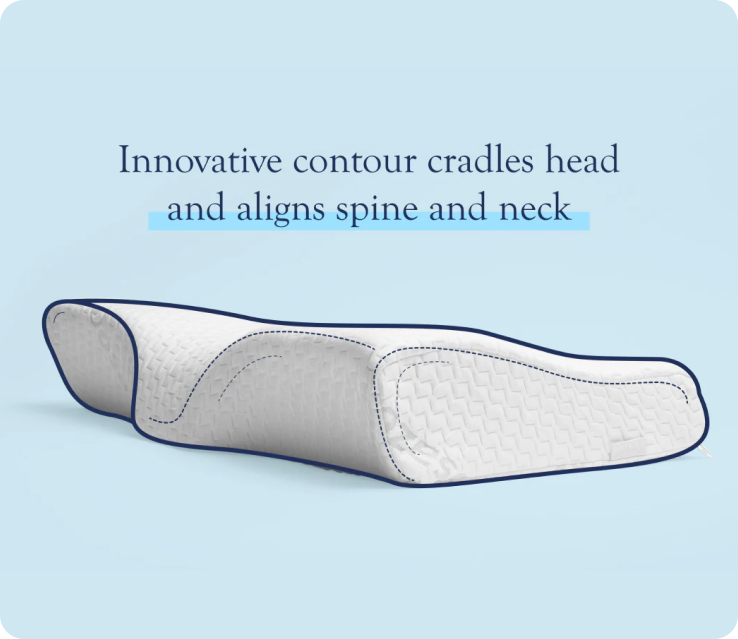
If you also want a pillow for the nights you sleep flat, the Alignment Kit pairs the wedge with our Contoured Orthopedic Pillow, which is shaped to support the curve of your neck and works for side, back and stomach sleepers. One caution: a thick contoured pillow placed on top of a wedge adds height and can push your chin toward your chest. Most people use one or the other on a given night.
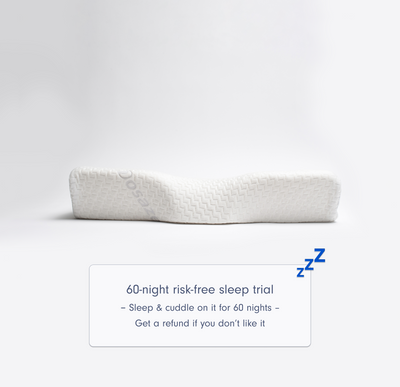
The wedge isn't the right pick for everyone. If you sleep on your stomach, a wedge will feel wrong whatever the brand. If you keep waking up at the bottom of the slope after a couple of weeks, bed risers may suit you better. And if you want to change the angle often, a wedge can't do that. Our FAQ page covers the 60-night sleep trial and returns, which gives you time to find out. You can see the rest of our range in pillows.
Getting used to sleeping on a wedge
- Push the tall end flat against the headboard so the wedge can't creep away from you during the night.
- Put a pillow under your knees. It gives your hips something to rest against and cuts down on sliding.
- Line up the low edge of the slope with the middle of your back, not your neck. The incline should start below your shoulder blades.
- Give it one to two weeks. The first few nights often feel odd, especially for people who usually sleep curled up.
- If your neck feels pushed forward, add a thin pillow rather than a thick one.
Elevation works best combined with the usual reflux habits, such as finishing dinner a few hours before bed. A wedge won't undo a late, heavy meal.
Frequently asked questions
How high should a wedge pillow be for acid reflux?
A 7 to 8 inch wedge is a common starting point for reflux. Taller wedges of 10 to 12 inches put you closer to sitting up, which some people prefer and many find hard to sleep on. The length of the slope matters too, since a longer wedge gives a gentler angle at the same height.
Should I put a pillow on top of a wedge pillow?
A thin pillow on top is fine if your neck feels unsupported. A thick or contoured pillow adds height and can bend your chin toward your chest, which many people find uncomfortable. Try the wedge on its own first and add only as much as you need.
Can side sleepers use a foam wedge for GERD?
Yes, though it takes a little more adjusting than back sleeping. Choose a wedge at least as wide as a standard pillow so your shoulder and hip stay on the slope when you turn. Many people with reflux find the left side more comfortable.
Is a foam wedge better than raising the head of the bed?
They do a similar job in different ways. A foam wedge only lifts your side of the bed and is easy to move or remove, while bed risers tilt the whole bed and the whole body. Risers suit solo back sleepers; a wedge suits people sharing a bed or trying elevation for the first time.
Can a reflux wedge pillow be used for anything else?
Many wedges double as a backrest for reading or watching TV in bed. The Dosaze Therapeutic Cooling Wedge Pillow can also be placed under your legs for lumbar relief while lounging. Dosaze also describes it as helpful for snoring and back pain when you sleep at an elevated angle.


