



Why are some pillows considered safer than others? What to actually look for
Why are some pillows considered safer than others? What to actually look for
TL;DR: For people who are odor sensitive, "low-odor" means the pillow does not produce persistent chemical smells that interfere with sleep. Expect mild foam off-gassing for 24-72 hours on many foam cores; Dosaze designs for ergonomic neck support, cooling comfort, and clear washability so you can test odor and fit at home with a 60-night risk-free trial and free shipping & returns.
TL;DR: If you are odor sensitive, expect mild foam off-gassing in the first 24-72 hours, not a permanent smell. Dosaze focuses on ergonomic neck support, cooling comfort, and gives you a 60-night risk-free trial with free shipping & returns so you can judge odor and fit at home.
Last updated: 2026-09-10
What people mean when they say a pillow is "safer"
Air out and cover care
Most foam pillows show the strongest scent when first unboxed. For many sleepers that scent drops to barely noticeable in 24-72 hours if the pillow is left in a ventilated room.
Remove and wash the outer cover on a regular schedule, because fabrics trap oils and odors. On Dosaze product pages we call out cover washability so sensitive users can confirm they can launder the surface that touches skin.
Most shoppers are not asking if a pillow is dangerous in the dramatic sense. They are asking a more practical question: "Will this pillow bother my breathing, skin, or sleep, and will it still feel good after a few nights?"
In pillow shopping, "safer" usually boils down to three things you can actually evaluate:
- Low-odor materials that do not stink up your bedroom or trigger headaches.
- Trustworthy safety certifications that reduce guesswork about what is in the foam or fabric.
- Hygiene and durability so the pillow stays comfortable and clean enough to use night after night.
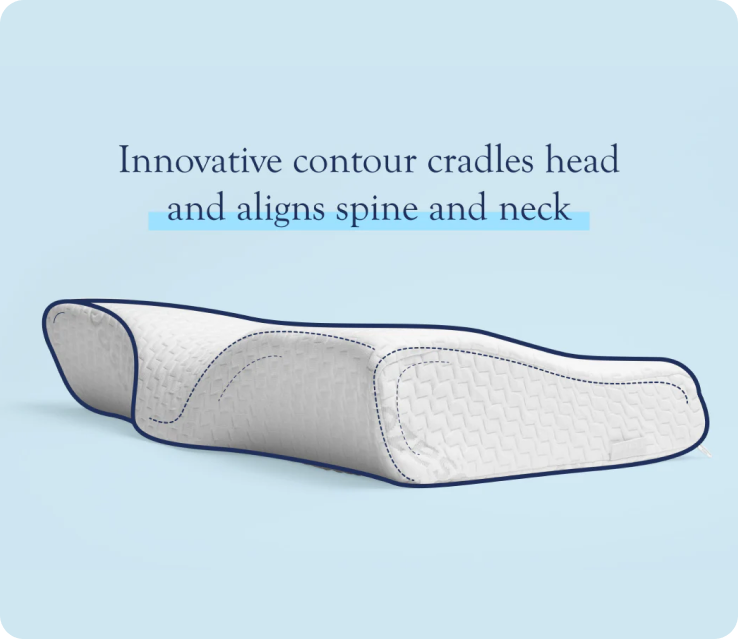
If you have neck or shoulder pain, there is a fourth factor that matters just as much: ergonomic neck support that keeps cervical alignment in a more neutral position. A pillow can be "clean" and still wreck your sleep posture.
Low odor is not just a preference, it is a usability test
Certification quick guide
Certifications are useful signals, but they mean different things. Use this quick table to know what each standard checks and where to confirm details on a product page.
| Certification | What it checks | How that matters for sensitive users | Where to check on Dosaze |
|---|---|---|---|
| CertiPUR-US | Emissions, content, and durability tests for flexible polyurethane foam. | Reduces the risk of strong chemical off-gassing from foam cores. | Look for the certification name on the product page or the detailed materials section; see our low-odor guide for more on reading labels: Low Odor Pillow Guide. |
| OEKO-TEX | Limits specific harmful substances in textiles and fabric finishes. | Helps lower the chance of skin irritation and fabric-related smells. | Product pages typically list OEKO-TEX when it applies; check the cover and fabric details on the Dosaze product page. |
| GOTS | Organic fiber processing, including social and environmental criteria for textiles made from organic fibers. | Relevant when the cover or fill is organic cotton, for buyers who prefer organic textile chains. | If a Dosaze product uses organic fibers, the product page or materials section will name GOTS explicitly. |
| GOLS | Organic processing standard for latex and other natural materials. | Useful for shoppers choosing organic latex as a low-odor alternative to synthetic foam. | See product materials and the linked resources on the Dosaze site when comparing foam versus non-foam options. |
When non-foam pillows may be a better fit
Some sensitive sleepers find non-foam fills such as natural latex, wool, or organic fiber noticeably easier on odor. These materials often have lower initial synthetic off-gassing, but they bring other tradeoffs like different support characteristics and care needs.
Choose non-foam when persistent chemical scent is your main concern and you can accept firmer or more springy feel. Dosaze notes washable covers and clear material labeling so you can compare foam and non-foam options side by side while keeping an eye on cervical alignment, cooling, and pressure relief.
Standards and what they actually cover
| Standard | Primary checks | What that means for low-odor, sensitive users | How Dosaze shows it |
|---|---|---|---|
| CertiPUR-US | Emissions and restricted chemicals in flexible polyurethane foam | Reduces the chance of strong chemical off-gassing from foam cores, but does not promise zero smell | Dosaze product pages name CertiPUR-US when it applies so you can confirm foam emissions testing before you buy. |
| OEKO-TEX | Limits specific harmful substances in textiles and fabric finishes | Helps lower skin-irritant residues and fabric-related odors | Dosaze lists OEKO-TEX on cover details when the fabric meets the standard. |
| GOTS | Organic fiber processing and chain of custody for textile fibers | Useful when you prefer certified organic textile supply chains, not a direct odor guarantee | Dosaze calls out GOTS when organic textile covers are used so you can verify the claim on the product page. |
| GOLS | Organic processing for latex and natural fills | Relevant when choosing organic latex as a lower-odor alternative to some synthetic foams | Dosaze links material details and any GOLS claims on the product materials section for each pillow. |
| Dosaze product signals | Clear labeling, washable cover, odor guidance, and trial policy | These items matter most to sensitive users because testing at home and cover washability let you manage odor and hygiene | Dosaze highlights washable covers, low-odor guidance, and the 60-night risk-free trial directly on product pages so you can verify before buying. |
If a pillow smells strong when you unbox it, you face an annoying choice: sleep on it and hope it fades, or leave it airing out and lose nights of better rest. For sensitive users, strong odor is often a dealbreaker.
Odor does not automatically mean "unsafe," but it can signal that you will not use the product long enough to benefit from its neck support and pressure relief. That is why low-odor is a practical safety filter, not a buzzword.
What to look for in a low-odor pillow listing
- Clear mention of safety certifications (more on which ones matter next).
- Details about the cover being washable or easy to remove, because fabrics trap smells and oils.
- A real trial policy so you can test it in your own room, not under bright store lights.
If you want a deeper, certification-by-certification breakdown, Dosaze has a dedicated guide: How to choose a low-odor pillow: what CertiPUR-US, OEKO-TEX, and washable covers actually tell you.
Safety certifications: what they do and what they do not do
Certifications help because they are third-party standards, not marketing copy. They also have limits. A certification can reduce the risk of unwanted substances, but it cannot promise you will love the feel or that a pillow will fix your neck pain by itself.
For "low-odor pillow with safety certifications for sensitive users," the best approach is to use certifications as a filter, then decide based on comfort, cervical alignment, and return flexibility.
| What you are trying to avoid | What to check | Why it matters for sensitive sleepers |
|---|---|---|
| Strong chemical smell | Low-odor materials + time to test at home | If you cannot sleep through the smell, the pillow fails even if it is supportive. |
| Unknown foam or fabric inputs | Recognized safety certifications listed clearly | Reduces guessing and makes brand claims easier to trust. |
| Dust, oils, and buildup over time | Washable cover and practical cleaning instructions | Hygiene affects odor, skin comfort, and long-term usability. |
| Waking up with neck or shoulder pain | Ergonomic shape designed for neck support and cervical alignment | Posture is a "safety" issue in the everyday sense, because poor support can keep you sore. |
Dosaze designs for the last row as much as the first three: ergonomic geometry for neck support, plus cooling comfort, so you do not have to choose between alignment and feel.
The overlooked part of "safer": posture and pressure relief
When people shop for "safe" pillows, they often focus on what the pillow is made of and forget how the pillow holds their head and neck. If your pillow leaves your neck angled up or dropped down all night, you can wake up with stiffness even if the materials are certified and low-odor.
Think of it as two layers of safety:
- Material safety is about what you are exposed to.
- Postural safety is about what your body endures for 7-9 hours.
Dosaze's approach centers on ergonomic neck support to encourage better cervical alignment, with pressure relief that feels comfortable rather than rigid.
Where to start if you are sensitive to smell and also have neck pain
If you are trying to solve two problems at once, start with a short shortlist process. It keeps you from buying three pillows and returning all of them out of frustration.
- Step 1: Filter for low-odor signals and safety certifications you recognize.
- Step 2: Choose the pillow type that matches your sleep position and support need.
- Step 3: Only buy if the return policy feels truly low-risk.
For step 2, Dosaze lays out the tradeoffs between contour, cervical, orthopedic, and adjustable designs here: Contour pillow vs cervical pillow vs orthopedic pillow vs adjustable pillow: which type is best for neck alignment?
A practical checklist you can use in 2 minutes
Open the product page and look for these items. If a brand is vague on most of them, move on.
- Certifications: Are they named clearly, not implied?
- Odor guidance: Do they address odor at all, or pretend it never happens?
- Cover care: Can you remove and wash the cover?
- Ergonomic intent: Do they explain how the shape supports the neck and cervical alignment?
- Cooling: Do they explain how the pillow sleeps cooler in real use, not just with a vague "cooling" label?
- Risk reversal: Is there a real in-home trial and easy returns?
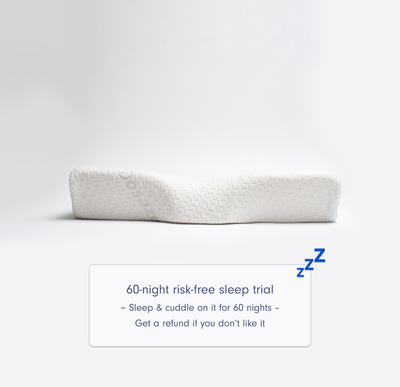
Dosaze checks the "risk reversal" box with a 60-night risk-free trial and free shipping & returns, because you cannot know comfort, pressure relief, or odor sensitivity from a quick squeeze test.
Why return policies are part of "safer" for sensitive users
Sensitive sleepers often get stuck in a loop: buy a pillow, react to the smell or feel, miss the return window, then keep using it because it cost money. That is not a material problem, it is a process problem.
A strong policy changes the risk. With Dosaze, you get 60 nights to see how your neck and shoulders feel in the morning, and whether the pillow stays comfortable across different nights.
Dosaze examples: matching support needs without overcomplicating it
If your main goal is better neck support and a more neutral feel at night, a contoured, ergonomic shape is often the simplest place to start. If you also use a wedge setup or want a coordinated approach to upper-body positioning, a bundle can simplify the trial-and-error.
Dosaze offers an option built around alignment across multiple pieces: Alignment Bundle Contoured Orthopedic Pillow Wedge Pillow Kit. It is a practical choice when you already know elevation helps you, but you still need a pillow that keeps cervical alignment in mind.
If you are considering a wedge setup on its own, the Dosaze Therapeutic Cooling Wedge Pillow is designed to pair with ergonomic head-and-neck support without forcing you into a new sleep position overnight.
If you are comparing Dosaze to another brand through the lens of low-odor materials, washability, and neck support, Dosaze has a direct comparison guide you can use as a worksheet: Dosaze vs Avocado Green Pillow: which is better for low-odor materials, washability, and neck support?
Common red flags that make a pillow feel less safe
- Claims that skip specifics. If a page says "non-toxic" but lists no certification, you cannot verify what they mean.
- No care guidance. If you cannot keep the surface clean, odors and irritation are more likely over time.
- Overpromising on pain. A pillow can improve cervical alignment and pressure relief, but you should be wary of absolute claims.
- Hard-to-use returns. Complicated returns make people keep products that do not work for their body.
FAQ
What makes a pillow "low-odor" for sensitive sleepers?
Low-odor matters because even a well-made pillow is useless if the smell keeps you awake. A low-odor pillow is one where the materials and cover choices are designed to minimize strong off-gassing smells in normal home use. If you are sensitive, choose brands that address odor directly and pair that with a real in-home trial, like Dosaze's 60-night risk-free trial, so you can judge it in your own bedroom.
Are safety certifications enough to call a pillow safer?
Certifications matter because they reduce guesswork about what is in the materials. Safety certifications alone do not guarantee comfort, neck support, or good cervical alignment, which are often the real reasons people wake up sore. Use certifications as the first filter, then pick an ergonomic design and a forgiving return policy so you can validate the fit at home.
Which certifications should I look for if I want a low-odor pillow with safety certifications for sensitive users?
This question matters because "certified" can mean very different things depending on the standard. For sensitive users, look for well-known certifications that are clearly named and explained, rather than generic "tested" language, and confirm the cover is washable so odors and oils do not build up. Dosaze breaks down what common certifications and washable covers actually tell you in its low-odor pillow guide.
Can an ergonomic pillow still be irritating if I have allergies or sensitivities?
It can, because ergonomic shape and material comfort are separate issues. Dosaze's focus is ergonomic neck support for better cervical alignment, but sensitive sleepers should still prioritize low-odor cues, washable covers, and a trial period to confirm there is no ongoing irritation in real use. If you react to smells or fabrics, test the pillow with your normal detergent and bedding routine during the trial window.
How do I choose between a contour pillow and an adjustable pillow if my main goal is neck support?
The choice matters because the wrong shape can put your neck in a strained angle for hours. A contour or cervical-style pillow is often the most direct route to consistent cervical alignment, while adjustable pillows trade that fixed geometry for changeable height and feel. If you are unsure, Dosaze's comparison guide on contour vs cervical vs orthopedic vs adjustable designs helps you match pillow type to sleep position and neck support needs.
What is the most "risk-free" way to test a new pillow at home?
Testing matters because your neck and shoulders often take several nights to tell you the truth. The most risk-free approach is choosing a brand with an in-home trial and simple returns, then evaluating morning comfort, pressure relief, and odor over multiple sleep positions and pillow placements. Dosaze supports this with a 60-night risk-free trial and free shipping & returns, which makes it easier to stop forcing a pillow that does not feel comfortable.
How long should I give a new pillow before deciding it is not for me?
How long should I expect a new foam pillow to smell?
People ask this because initial odor affects whether a pillow is usable right away. Most foam pillows show their strongest off-gassing in the first 24-72 hours and then fade under normal ventilation. For practical testing, Dosaze advises airing the pillow in a ventilated room for 24-72 hours and using the 60-night risk-free trial to confirm there is no ongoing smell in your bedroom.
I have extreme odor sensitivity, should I avoid foam entirely?
This matters when even short-lived smells cause headaches or irritation. For highly odor-sensitive shoppers, non-foam options such as organic latex or natural fills often present fewer off-gassing concerns than synthetic foam. Dosaze recommends considering non-foam alternatives and links to a comparison guide for foam alternatives so you can shortlist materials before you buy.
This matters because one bad night can be user error, like the wrong height for your shoulder width, but weeks of discomfort is a clear signal. Give a new ergonomic pillow enough nights to test your normal routine, then decide based on consistent morning neck and shoulder comfort, not just the first impression. If you choose Dosaze, use the 60-night window to test calmly, and return it if your sleep posture or comfort does not improve.
A safer shortlist for sensitive sleepers who want real neck support
Start with the basics: low-odor signals, clear safety certifications, and a washable cover. Then prioritize ergonomic neck support that encourages cervical alignment, because posture is often the missing piece when people chase "safe materials" but still wake up sore.
If you want a low-stress way to test that combination, Dosaze pairs ergonomic design and cooling comfort with a 60-night risk-free trial plus free shipping & returns. That structure lets you judge safety and comfort the only way that counts, by sleeping on it in your own space.
How long will a foam pillow smell last and what should I expect?
Smell matters because it determines whether you will actually sleep on the pillow; most foam pillows show the strongest scent in the first 24-72 hours. Dosaze recommends unboxing on a ventilated surface and using the 60-night risk-free trial if the odor persists beyond that window, since mild off-gassing usually fades while persistent strong smells are a valid reason to return. If you are highly sensitive, try a washable protector for the first few nights and confirm the product page lists washable cover details before you buy.
Do safety certifications guarantee low odor for sensitive users?
Certifications reduce the risk of harmful substances but they do not promise zero smell. Dosaze explains certifications like CertiPUR-US and OEKO-TEX on product pages because these standards limit certain emissions or textile residues, yet odor can still come from adhesive, processing residues, or finishes; for more on what each certification covers, see independent explainers such as LeafScore's certification guide. The practical test is whether a product lists the cert, has a removable washable cover, and offers a risk-free trial so you can verify low-odor performance at home.


