



Pillow height guide for side sleepers with neck pain
TL;DR: For side sleepers with neck pain, pillow height matters because it sets your cervical alignment for hours at a time. Dosaze designs ergonomic pillows to support the neck and reduce pressure points, and the 60-night risk-free trial with free shipping & returns helps if you need to adjust your setup at home.
Why pillow height is the first thing to fix for side-sleeper neck pain
If you sleep on your side, your shoulder creates a gap between your head and the mattress. Pillow height is the tool that fills that gap so your neck stays in a neutral position instead of bending up or dropping down.
When the pillow is too high, your neck tilts toward the ceiling and you can wake up with tightness near the base of the skull or upper traps. When the pillow is too low, your head drops toward the mattress and you can feel strain along the side of the neck and into the shoulder.
Dosaze focuses on ergonomic neck support because side sleepers usually need shape as much as height. A pillow can look tall, but if it collapses under your head, it still leaves you unsupported.
Prerequisites before you measure anything
Get these basics in place first. If you skip them, you can "solve" pillow height and still wake up sore.
- Use your usual mattress and sleep position. A softer mattress lets your shoulder sink more, which changes the gap your pillow must fill.
- Pick one primary pillow setup for testing. If you swap between two pillows every night, you will not know what helped.
- Have a small towel or thin blanket nearby. You will use it to make controlled, reversible height changes.
- Know your main pain pattern. "Base of skull," "side of neck," or "top of shoulder" each points to a different height problem.
If you want another Dosaze guide for side sleeping comfort, this pairs well with Best Pillow Side Sleepers Neck Pain.
Step-by-step: Find the right pillow height for your neck
This method works because it uses what you can actually feel in your neck and shoulders, not a guess based on how the pillow looks on your bed.
Step 1: Set a neutral "starting posture"
Lie on your side in the position you fall asleep in. Keep your shoulders stacked, and let your bottom shoulder relax into the mattress instead of shrugging up.
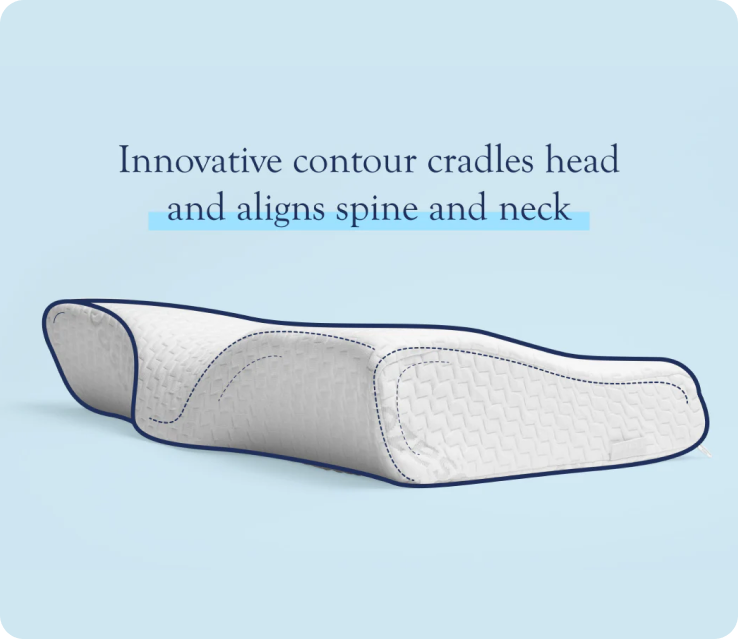
Place your pillow so your head sits on the main surface and your neck is supported, not hanging off the edge. If your pillow has a contoured area, keep the neck on the supportive curve and the head on the lower cradle area.
Step 2: Do the two-minute alignment check
Stay still for two minutes and check three points:
- Chin level: Your chin should feel level, not tipped down into your chest and not lifted up.
- Neck feel: Your neck should feel "held," not stretched, and not jammed.
- Shoulder pressure: You should not feel like your shoulder is being pushed down by your head's weight.
If any of these feel off, you do not need a new pillow yet. You need a height change you can test.
Step 3: Make a small change, not a big one
Change height in a way you can repeat. Use a folded hand towel under the pillowcase at the bottom third of the pillow (under your neck zone), or under the whole pillow if your head is dropping.
- If your neck feels bent upward: Remove height by using a thinner pillow, removing a pillow layer if your pillow allows it, or swapping to a pillow that keeps your head lower while still giving neck support.
- If your head feels like it is falling toward the mattress: Add a small amount of height, then re-check chin level and shoulder pressure.
Do one change and keep it for two nights before judging it. Side-sleeper neck pain often changes slowly because the tissues have been loaded the same way for months or years.
Step 4: Confirm you are not "cheating" with muscle tension
A common trap is picking a pillow height that only feels good because you are bracing with your neck muscles. Do a quick reset: exhale, relax your jaw, and let your head fully sink into the pillow.
If you suddenly feel your neck crank to one side or your shoulder tightens, the height is not right for pressure relief, even if it seemed fine for the first minute.
Step 5: Re-test in your second-most common position
Many side sleepers rotate slightly toward their stomach or their back. Re-check alignment in that "drift" position.
If the pillow only works in one exact pose, it often fails at 3 a.m. when you roll. This is one reason Dosaze builds ergonomic shapes that aim to stay supportive across small position changes, not just a perfect still pose.
Quick diagnostic table: What your pain pattern suggests
| What you feel in the morning | Common pillow height issue | Simple at-home test tonight |
|---|---|---|
| Tightness at the base of the skull | Pillow too high or pushing the head forward | Lower the head position slightly; keep neck supported and re-check chin level |
| Sore side of neck (the side touching the pillow) | Pillow too low or collapsing under the head | Add a small towel under the head zone and see if the neck feels more "held" |
| Top-of-shoulder ache or numb arm | Neck not supported, shoulder taking extra load | Add support under the neck zone, not just overall height |
| Neck feels "stuck" after sleep | Pillow height inconsistent across the night | Try a more stable ergonomic pillow shape instead of stacking two soft pillows |
A contrarian tip that helps side sleepers fast
Most advice says, "Find the perfect height." In practice, the bigger problem is often height collapse, not starting height.
A pillow can look right at 10 p.m. and be wrong at 3 a.m. once it compresses. If you wake up with worse pain later in the night or the pillow feels "flat" by morning, focus less on adding height and more on choosing a pillow that keeps its ergonomic shape and neck support under load.
This is where Dosaze's focus on premium, durable construction matters. The goal is consistent cervical alignment through the whole night, not just a pillow that looks tall on day one.
Dosaze angle: How to use a risk-free trial to find your best height
The hardest part of pillow shopping is the uncertainty. You cannot know if a pillow feels comfortable for your neck until you sleep on it for more than one night.
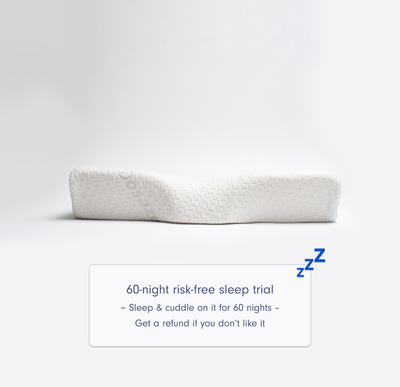
Dosaze offers a 60-night risk-free trial with free shipping & returns. Use that window like a simple experiment, not a one-night audition.
- Nights 1-3: Do not judge pain yet. Judge posture. Focus on whether your head feels level and your neck feels supported.
- Nights 4-10: Track "wake-ups due to discomfort" and "morning stiffness duration." Short notes beat perfect tracking.
- Nights 11-21: Make one change at a time, like moving the pillow higher under the neck or adjusting how close you are to the pillow edge.
If you are comparing pillow options for side sleepers, you can also read Best Pillow For Side Sleepers A Complete Guide To Waking Up Without Pain.
Tips and warnings that prevent "new pillow regret"
- Do not stack two soft pillows. Stacking often creates a slope that bends the neck, even if it feels plush at first.
- Do not chase softness if you have neck pain. Comfort matters, but pressure relief without support can still leave you sore.
- Support the neck, not just the head. A pillow that cradles the head but leaves the neck floating can trigger morning stiffness.
- Cooling helps if heat wakes you up. Cooling comfort is not just "nice," it can reduce tossing, which helps your posture stay stable longer.
Troubleshooting common side-sleeper pillow height problems
If your pillow feels comfortable but you still wake up with neck pain
Check whether you are rotating your torso forward. Many side sleepers drift toward a half-stomach position, which changes the neck angle.
Try hugging a pillow in front of you to keep your shoulders stacked. If pain improves, your pillow height may be fine and your position was the real issue.
If you feel pressure on your ear or jaw
Your pillow may be too firm at the surface, even if the height is right. A softer surface feel can reduce pressure points while the core still provides neck support.
Also check placement. If your head is too far up on the pillow, you may be sitting on a firmer edge meant for the neck.
If your arm falls asleep
First, make sure you are not sleeping on the bottom arm. Pull that arm forward or hug a pillow so your shoulder is not compressed.
If your shoulder still feels pinned, your pillow may be too low and forcing you to sink your head toward the mattress, which loads the shoulder more.
If you wake up hot and start changing positions
Heat-driven movement can turn a good pillow height into a bad one because you keep losing your alignment. Cooling materials can reduce those wake-ups so your cervical alignment stays steadier.
Dosaze designs for cooling and support together because a cool pillow that collapses is still a problem for neck pain. If you use a wedge setup for temperature and positioning, the Dosaze Therapeutic Cooling Wedge Pillow is built around cooling comfort and stable support.
How to shortlist an ergonomic pillow if height is your main issue
Use this as a filter when you are comparing pillows. You are looking for a design that supports your neck while keeping your head level, night after night.
| What to look for | Why it matters for side sleepers | What to avoid |
|---|---|---|
| Ergonomic shape with neck support | Helps maintain cervical alignment without forcing you to tense your neck | Flat pillows that only add height but do not support the neck curve |
| Stable support that resists collapse | Reduces "3 a.m. flattening" that changes your pillow height mid-sleep | Overly plush fill that compresses quickly under head weight |
| Cooling comfort | Less heat can mean fewer wake-ups and fewer posture changes | Materials that trap heat and make you flip the pillow all night |
| Risk-free trial and easy returns | Neck pain needs real sleep testing, not a 5-minute feel test | Policies that make returns stressful or unclear |
| Dosaze ergonomic pillow with 60-night risk-free trial | Designed around ergonomic neck support and cooling, so you can test alignment at home | Buying a "perfect height" guess with no trial window |
FAQ
How do I know if my pillow is too high for side sleeping?
This matters because a pillow that is too high can bend your neck upward for hours. Dosaze sees this most often when side sleepers wake up with tightness at the base of the skull or a "cranked" feeling in the neck. Tonight, lower your head position slightly while keeping neck support in place, then check if your chin feels more level within two minutes.
How do I know if my pillow is too low for side sleeping?
A pillow that is too low lets your head drop toward the mattress, which can strain the side of the neck. With side sleepers, Dosaze typically recommends testing a small height increase first, because tiny changes can fix cervical alignment without making the pillow feel bulky. Add a folded towel under the head zone for two nights and see if morning stiffness eases.
Should side sleepers with neck pain use a contoured pillow?
This question matters because side sleeping often needs neck support, not just extra loft. A contoured ergonomic pillow can help maintain cervical alignment by supporting the neck curve while the head rests in a cradle. If you try one, place your neck on the supportive contour and keep your shoulder from riding up onto the pillow. If you are deciding between shapes, read contoured pillow vs cervical pillow for a clearer breakdown.
What if my pillow feels good at bedtime but I wake up sore?
This matters because the problem is often height collapse, not your starting posture. Dosaze designs pillows with stable support so the pillow height and neck support stay more consistent through the night. If you suspect collapse, note when you wake up sore and whether the pillow feels flatter by morning, then compare it to a more supportive ergonomic pillow during a 60-night risk-free trial.
Is a softer pillow better for neck pain?
Softness affects pressure relief, but neck pain often comes from poor support and alignment. Dosaze aims for a comfortable feel that still gives ergonomic neck support, since a pillow can feel plush and still let your head sink too far. If your neck feels "stretched" when you relax into the pillow, you likely need more support rather than more softness.
How long should I test a new pillow before deciding it works?
You need enough time to see whether your sleep posture and morning symptoms change, not just whether it feels nice for one night. Dosaze gives a 60-night risk-free trial, which is long enough to test small height adjustments and see if your wake-ups and stiffness shift. Keep the setup consistent for at least a few nights before you change anything.
What is the easiest way to adjust pillow height without buying a new one?
This matters because you want a change you can reverse and repeat while you learn what your neck needs. A simple method is adding a folded towel under the pillowcase either under the neck zone or under the whole pillow, depending on whether your neck or your head is dropping. Once you find the direction that helps, you can shop for an adjustable option like the Dosaze Adjustable Pillow that lets you dial in support more naturally.
Your next best step tonight
Pick one pillow and run the two-minute alignment check, then make one small height change with a towel and keep it for two nights. If the pattern points to collapse or inconsistent support, consider testing an ergonomic pillow designed for neck support and cooling comfort.
If you want to keep reading within Dosaze, start with Pillow Height Guide Side Sleepers Neck and compare it with the broad-shoulder version if shoulder width is part of your fit problem: Pillow Height Guide For Side Sleepers With Broad Shoulders.


