



The Best Pillow for Side Sleepers Isn't What Most People Think
The best pillow for side sleepers is the one that fills the space between your ear and the mattress so your head stays level with your spine. For most people that means a medium-firm pillow somewhere around 4 to 6 inches high. The exact height depends on your shoulder width and how far your shoulder sinks into your mattress, so an adjustable pillow is the safest choice if you aren't sure. If you switch between your side and your back during the night, look for adjustable fill or a contoured shape, because back sleeping needs less height than side sleeping.
Most pillow marketing leads with material: memory foam, latex, down alternative. Material matters, but it is the second decision. Height comes first.
Why side sleeping asks the most of a pillow
On your side, your shoulder holds your upper body several inches off the mattress, and your head has to be held at that same height or your neck bends. A pillow that is too thin lets your head drop toward the mattress. One that is too thick tips it toward the ceiling. Hold either angle for six to eight hours and you are likely to wake with a stiff neck, sometimes with tension running into the shoulders and upper back.
There is a second, less obvious problem with a pillow that's too tall. Many side sleepers push the bottom shoulder forward to make room for it, which twists the upper body. The right height lets that shoulder settle under you instead.
Back sleepers need much less. The pillow only has to fill the curve behind the neck and keep the chin from tipping toward the chest. Stomach sleepers need very little at all.
How to work out the right loft for your body
Use 4 to 6 inches as a starting point, then adjust for two things:
- Shoulder width. Broad shoulders create a bigger gap and need a taller pillow; narrow shoulders need less.
- Mattress feel. On a plush mattress or pillow top, your shoulder sinks in and the gap shrinks, so you need less loft. On a firm mattress your shoulder stays higher and you need more.
A petite person on a soft pillow-top bed and a broad-shouldered person on a firm mattress are both side sleepers, and they can need very different pillows. That is why "best rated" lists often disappoint: the top pick was the right height for someone else.
To check your own setup, lie on your side in your normal position and have someone look at you from behind (a phone photo works too). Your neck should continue in a straight line from your upper back, with no bend up or down.
Then pay attention to the middle of the night. Some pillows feel right when you first lie down and then compress under the weight of your head, so by 3 a.m. you have lost an inch of height. Support that stays consistent for the whole night matters more than how a pillow feels in the first five minutes.
The best pillow for side and back sleepers
If you fall asleep on your back and wake on your side, one fixed height will be wrong for part of the night. A few ways to handle it:
- An adjustable pillow lets you remove fill until you find a height that is comfortable on your back and still supports you on your side. Shredded fill also moves, so when you roll over you can push a little more under your neck.
- A contoured pillow has a shaped surface rather than a flat top. Many contoured designs give the neck more support at the edge and let the head rest lower in the middle, which suits people who change position.
- A tall, firm block can be excellent on your side and too high on your back, pushing your chin down.
- Down and down alternative are easy to shape for back sleeping but tend to compress too much through the night to hold a side sleeper's head up reliably.
Pillow types compared
| Type | Height control | How it holds through the night | Heat | Suits |
|---|---|---|---|---|
| Adjustable shredded foam | Add or remove fill | Good once set | Fill allows airflow; gel versions help further | Side and combination sleepers unsure of their loft |
| Contoured memory foam | Fixed shape | Very consistent | Can trap heat unless the foam or cover is designed to cool | People who like a structured, shaped feel |
| Solid memory foam block | Fixed | Consistent; slow to respond when you move | Traditional foam runs warm | Strict side sleepers whose height matches the pillow |
| Latex | Usually fixed | Springs back quickly when you shift | Generally cooler than traditional memory foam | Warm sleepers who move around |
| Down or down alternative | Scrunch or fold | Compresses and flattens over time | Breathable | Back and stomach sleepers; a compromise for side sleeping |
Memory foam molds around the head and spreads pressure away from the ear and temple, which many side sleepers like. Its slower response can feel sticky if you turn often, and that is where latex or shredded fill has the edge.
Side sleeping with back pain
Start below the pillow. If your mattress lets your hips sink too far, your spine is already curved before your head reaches the pillow, and no pillow can correct that at neck level. Once your mattress keeps your hips and shoulders roughly level, the pillow becomes the last piece to get right.
Two habits help side sleepers keep the whole spine in line:
- Choose a pillow height that keeps your neck straight, as above, so your upper back isn't twisting to compensate.
- Put a pillow between your knees. It stops the top leg from dropping forward and pulling the hips and lower back out of line.
A pillow supports posture. It won't treat a back problem, and pain that keeps coming back is worth raising with a doctor or physiotherapist.
Pillow top mattresses and toppers for side sleepers
Side sleepers often like a pillow top because it cushions the shoulder and hip, the two points that press hardest into the bed. The trade-off is that you sink further, so you will usually need a lower pillow than you would on a firm mattress. Check that your hips aren't sagging deeper than your shoulders. If they are, the surface is too soft for you.
If your current mattress feels too firm on your shoulder, a mattress topper adds that cushioning without replacing the bed. Whatever you change, recheck your pillow height afterwards, since a softer surface lowers your shoulder and shrinks the gap.
Which Dosaze pillow suits a side sleeper
Every pillow below is listed by Dosaze as working for side, back and stomach sleepers. They differ in whether you can change the height.
The Dosaze ThermaCool Adjustable Pillow has a ventilated gel core plus an adjustable cooling fill, so you can set the firmness and height yourself. It suits combination side and back sleepers who also run warm.
The Dosaze Adjustable Pillow (Made in the USA) uses a fully moldable, gel-infused memory foam fill with no polyester, and extra foam comes with every pillow. That extra foam is useful if you have broad shoulders and need more height than the pillow ships with. It is queen sized (18" x 26"). Expect to spend a few nights adding or removing fill before it feels right.
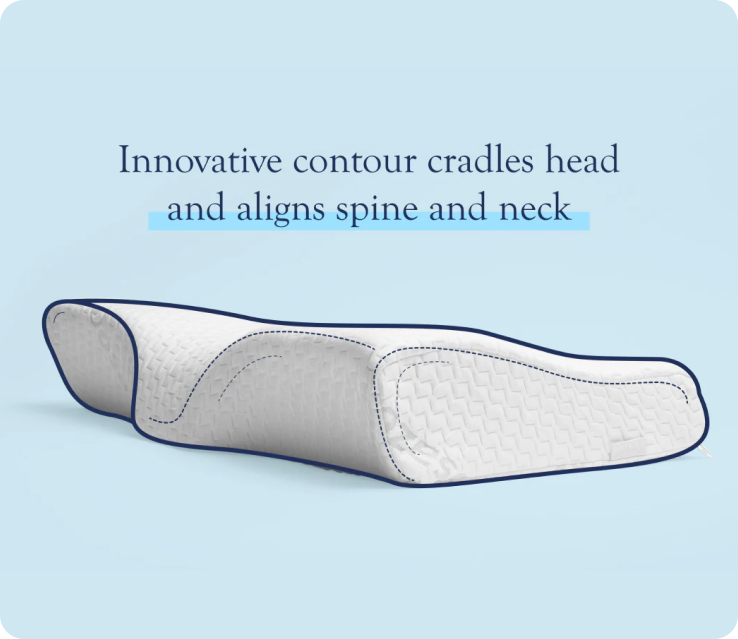
The Dosaze Contoured Orthopedic Pillow is premium memory foam shaped to cradle the natural curve of your neck and promote spinal alignment. Its fabric is naturally cooling and anti-microbial, and the cover comes off for washing. The shape is fixed, so it suits people who already know they like a structured, contoured feel. If you are unsure of your ideal height, an adjustable pillow gives you more room to experiment.
You can compare all of them in the Dosaze pillow collection.
When to replace your pillow
A side sleeper's pillow loses its usefulness as soon as it loses height, even if it still feels soft. Down and fiber pillows flatten fastest. If you find yourself folding your pillow in half or stacking a second one to get comfortable, it has probably compressed past the loft you need. Foam and latex keep their shape longer, but check them every year or two for permanent dips where your head rests.
Frequently asked questions
What pillow height is best for side sleepers?
Most side sleepers do well with a pillow around 4 to 6 inches high. Go taller if you have broad shoulders or a firm mattress, and lower if you are narrow-shouldered or sleep on a plush or pillow-top mattress. Your neck should stay in a straight line with your upper back when you lie on your side.
Can one pillow work for both side and back sleeping?
Yes, if you can change its height or it has a contoured shape. Back sleeping needs less height than side sleeping, so a fixed tall pillow often pushes the chin down when you roll onto your back. An adjustable fill pillow lets you find a height that works for both positions.
Is memory foam good for side sleepers?
Memory foam holds its shape through the night and spreads pressure around the ear and temple, which suits many side sleepers. Traditional memory foam can run warm, so look for gel, ventilated or cooling designs if you overheat. If you change position a lot, shredded foam or latex responds faster.
Should side sleepers put a pillow between their knees?
Many side sleepers find it helps. A pillow between the knees stops the top leg from sliding forward and twisting the hips and lower back. It pairs well with a head pillow of the right height so the whole spine stays in line.
Can I try a Dosaze pillow before committing?
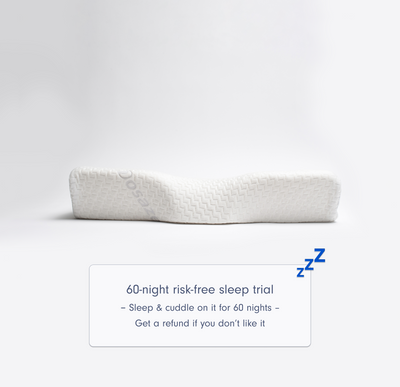
Dosaze offers a 60-night sleep trial. Details on shipping, returns and the trial are on the Dosaze FAQ page. A few weeks is a sensible amount of time to judge a new pillow, since your neck may need some nights to adjust.


