



Wedge Pillow for Shoulder Pain: A Buying Guide
A wedge pillow helps shoulder pain mainly when you need to sleep propped up: after shoulder surgery or an injury that makes lying flat sore, or when resting on your back at an angle keeps weight off the painful side. The wedge doesn't heal the shoulder. It holds your upper body in a position that may be easier to tolerate. The details that decide whether it works are the incline height, how far down your back the slope starts, the width (your arm needs somewhere to rest), and a firm base that won't let you sink. If your shoulder hurts because you sleep on your side on a pillow that's too flat or too thick, a wedge is probably the wrong tool, and we cover that below.
When a wedge makes sense for a sore shoulder
Most people searching for a wedge for shoulder pain fall into one of these groups:
- You've had rotator cuff repair, a shoulder replacement or similar surgery, and your surgeon or physical therapist has told you to sleep semi-upright for a while. Plenty of people rent or borrow a recliner for this. A wedge in your own bed does the same job for less space.
- Lying flat on your back makes the shoulder ache, and a slight recline feels better.
- You keep rolling onto the bad shoulder in your sleep, and a slope on your back makes that roll less likely.
- You already sleep elevated for reflux or snoring, and the shoulder pain is a separate problem you'd like the same setup to accommodate.
If you're recovering from surgery, the angle and sleep position your care team gives you comes first. Buy the wedge that matches their instructions rather than the one with the most features.
When a wedge probably won't help
Shoulder pain in side sleepers often comes from the gap between the head and the mattress. A pillow that's too low lets the head drop and the bottom shoulder takes the load; too high and the neck kinks upward. That's a pillow-height problem, and a wedge doesn't solve it. Lying on your side on a steep wedge can make it worse, since your hip slides down while your shoulder stays pinned against the slope.
Stomach sleepers will find a wedge close to unusable. And if your mattress has a body-shaped dip in it, raising your torso won't fix the twist that dip puts through your shoulders.
What to look for in a wedge for shoulder pain
Incline height
Wedges are usually sold by height at the tall end. Lower wedges (around 7 inches) give a gentle slope that many people can sleep on all night. Taller ones (10 to 12 inches) put you closer to a recliner position, which is what some post-surgery instructions call for. Taller isn't better by default. A steep slope with no knee support tends to slide you down the bed by morning, and you end up hunched with your chin on your chest.
Length, and where the slope starts
This gets overlooked. A short wedge only lifts your head and neck, which creates a bend at the upper back. For shoulder pain you want the incline to start low, around the middle of your back, so your shoulder blades rest on the slope with your head. Before you buy, measure from your waist to the top of your head, then compare that to the wedge length.
Width and arm room
A sore shoulder usually feels better when the elbow and forearm are supported slightly in front of the body instead of hanging off the edge. A narrow wedge leaves the arm dropping toward the mattress. Look for a wedge wide enough to lie on with a little room on the painful side, or plan to add a small pillow under that arm.
Firmness and foam
The base has to be firm, or the slope flattens under your weight and the angle you paid for disappears. Many wedges pair dense support foam with a memory foam top layer so the surface gives a little where your shoulder blade presses in. All-soft wedges feel nice in the store and sag by week three.
Cover and heat
You'll spend the whole night with your back against a solid foam surface, and that traps more heat than a mattress does. A breathable cover helps. It should also be removable and washable, since a wedge is hard to clean otherwise.
Wedge types compared
| Type | What it is | Best for | Trade-off |
|---|---|---|---|
| Standard incline wedge | One solid foam triangle | Back sleepers who want a steady, fixed angle | One angle only; side sleeping on it is awkward |
| Tall or recliner-style wedge | A taller wedge, sometimes with a backrest shape | Post-surgery instructions to sleep nearly upright | More sliding; often needs a knee wedge too |
| Multi-piece or foldable wedge | Stacked or hinged sections you rearrange | People who want to start steep and lower the angle as they recover | Seams can shift during the night |
| Wedge systems with an arm pocket | A wedge paired with a body pillow and a gap for the bottom arm (MedCline makes one) | Side sleepers who must stay elevated | Bulky, and takes up a lot of the bed |
An adjustable bed base is the other route. It raises the whole mattress, so there's no edge to slide off, but it costs far more and it's a big decision to make for a shoulder that may recover in a few months.
Setting up a wedge so your shoulder is comfortable
The wedge on its own is half the setup. A few small additions make a difference:
- Push the wedge snug against the headboard or wall so it can't creep away from you.
- Put a pillow under your knees. It stops the slide and takes some strain off your lower back.
- Rest the forearm of the sore side on a small pillow or a folded towel across your stomach, so the arm doesn't hang toward the mattress.
- Use a low, supportive pillow on top of the wedge for your neck, or none at all if the wedge already lifts your head enough. A thick pillow stacked on a tall wedge pushes your chin forward.
Where Dosaze fits, and where it doesn't
The Dosaze Therapeutic Cooling Wedge Pillow is a single-piece incline wedge designed by ergonomists for sleep posture in an elevated position. It uses CertiPUR-US certified memory foam with a cooling gel layer, and a nanoporous cover that wicks heat and moisture away. The cover comes off for washing. It also works propped behind you for back support when you sit up in bed, or under your legs. Dosaze designed it with snoring, back pain, acid reflux, GERD and sleep apnea in mind. It wasn't made specifically for shoulders, but it's a fit if you need to sleep elevated on your back. Check the dimensions on the product page against your torso length and the angle your clinician suggests.
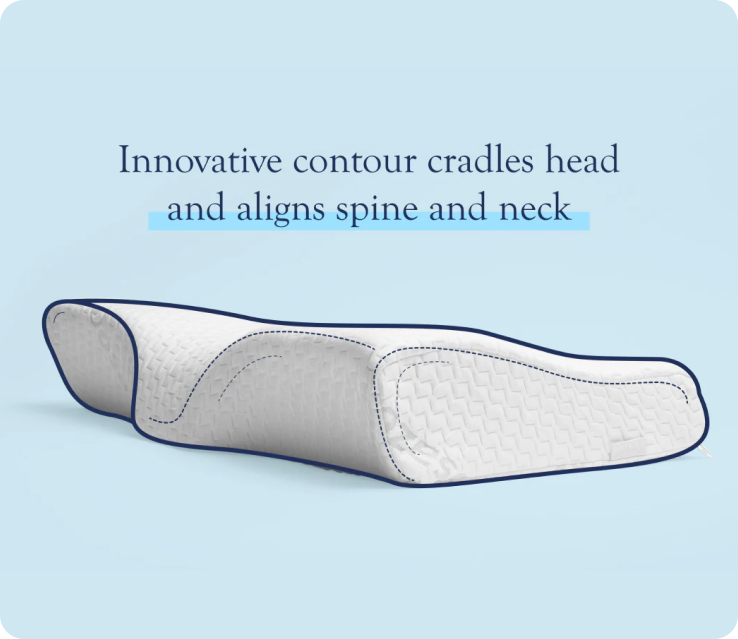
If you want a neck pillow on top of the wedge, the Alignment Kit pairs the wedge with our Contoured Orthopedic Pillow. The contour cradles the curve of the neck, which helps when you're on a slope and your head wants to tip forward.
Where it doesn't fit: the Dosaze wedge has no arm pocket, so if you have to sleep elevated on your side, a wedge system with an arm cutout will suit you better. And if you don't need elevation at all and your shoulder hurts from side sleeping, start with pillow height. The Contoured Orthopedic Pillow or one of the adjustable-fill pillows in our pillow collection are the better place to begin. Whatever you choose, our 60-night sleep trial gives you time to see how your shoulder responds.
Frequently asked questions
Can I sleep on my side on a wedge pillow with shoulder pain?
You can, but most solid wedges make it awkward because your hips slide down while your shoulder stays pressed into the slope. A low wedge is easier to side sleep on than a tall one. If you need to be elevated and on your side, a wedge system with an arm pocket is built for that position.
What angle wedge is best after shoulder surgery?
Follow the angle your surgeon or physical therapist recommends, since it depends on the procedure and how far along you are in recovery. Many people are told to sleep fairly upright at first, which points to a taller wedge or a multi-piece wedge you can lower later. Add a pillow under your knees so you don't slide down overnight.
Should I put a regular pillow on top of a wedge pillow?
Only if your head still feels low. A thick pillow on top of a tall wedge tends to push your chin toward your chest and strain the neck and shoulders. A thin or contoured pillow is usually enough, and some people need none.
Is a wedge pillow better than a recliner for shoulder pain?
A recliner supports your knees and arms and doesn't let you slide, which is why many people use one in the first weeks after shoulder surgery. A wedge lets you stay in your own bed and takes up less space. Some people use a recliner early on and move to a wedge once they can tolerate lying back further.


