


Neck pain every morning: Find the right pillow solution
TL;DR: Morning neck pain often comes from a pillow that pushes your head too high, lets it drop too low, or traps heat so you keep shifting all night. Dosaze focuses on ergonomic neck support and cooling comfort, with a 60-night risk-free trial plus free shipping & returns, so you can test whether the pillow actually improves your sleep at home.
Why your neck hurts most in the morning
If your neck feels worse when you wake up than when you went to bed, the problem is usually how your head and shoulders were supported for hours, not a single awkward move. A pillow can quietly put your neck into a bent position all night, then you wake up stiff.
The most common pattern is simple: your pillow does not match your sleep position, shoulder width, or how much your mattress lets your shoulder sink. When those variables change, the pillow height that used to feel fine can start causing morning pain.
What people mean by "wrong pillow"
- Too high: your chin tilts toward your chest and your neck stays flexed.
- Too low: your head drops and your neck stays extended.
- Too soft or too firm in the wrong places: your head drifts off center and you brace with your shoulder muscles.
- Too warm: you roll more often, and each roll is another chance to lose cervical alignment.
If you want a deeper breakdown of the headache and neck pain connection, Dosaze also covers it here: Can Wrong Pillow Cause Headaches Neck Pain.
What a pillow must do to reduce morning neck and shoulder pain
A neck-pain pillow has one job: keep your head level with the rest of your spine so your neck muscles can relax. That means the pillow needs the right shape and the right support, not just "soft" or "firm."
Dosaze designs for ergonomic neck support, cervical alignment, and pressure relief because those are the mechanical reasons many people wake up sore. Cooling matters too, since overheating often leads to more repositioning and lighter sleep.
The three checks that matter more than "firmness"
- Neck support: the pillow should fill the space under your neck, not just cushion the back of your head.
- Cervical alignment: from the side, your nose should line up close to the center of your chest, not angled up or down.
- Pressure relief: you should not feel a sharp point of load at the base of your skull or the top of your shoulder.
Where to start if you wake up with neck pain
Start with two quick observations you can make without buying anything. They tell you what to look for, and they stop you from repeating the same mistake with a different pillow.
Step 1: Identify your real sleep position
Most people are not one-position sleepers. You might fall asleep on your side, wake up on your back, and spend the worst part of the night half on your stomach.
- Side sleepers: usually need more height to fill the shoulder-to-neck gap.
- Back sleepers: often do better with a lower profile that supports the neck without pushing the head forward.
- Stomach sleepers: tend to do best with very low loft or no pillow, since head rotation can strain the neck.
If you switch positions, prioritize a pillow shape that stays supportive when you move, instead of a fluffy pillow that collapses and forces your neck to "find" support.
Step 2: Check your mattress interaction
Your mattress changes your pillow needs. A softer mattress lets your shoulder sink, which reduces the height you need. A firmer mattress keeps your shoulder higher, which often means you need a thicker pillow for side sleeping.
This is why two people can buy the same pillow and have opposite results. It is also why Dosaze emphasizes a 60-night risk-free trial and free shipping & returns, since a pillow has to work on your bed, not in a product photo.
A practical fit guide by sleep style
Instead of chasing a "best" pillow, aim for the best fit. Use the table below as a shortlist tool, then confirm by how your neck feels in the first week.
| Sleep style | What usually causes morning neck pain | What to look for in a pillow | Quick self-check |
|---|---|---|---|
| Side sleeping | Head drops toward the mattress or gets pushed up too high | Ergonomic shape that supports the neck and keeps the head level | Your nose points straight ahead, not down toward the bed |
| Back sleeping | Pillow pushes head forward and loads the base of the skull | Neck support with a profile that does not force flexion | Your chin does not tilt toward your chest |
| Combination sleeping | Pillow collapses after you switch positions and you wake up twisted | Supportive materials plus a shape that stays consistent | You can roll without "rebuilding" the pillow each time |
| Hot sleeping | Heat buildup leads to tossing, turning, and lost alignment | Cooling feel and breathable build so you move less | You do not flip the pillow for a cool spot |
If side sleeping or combination sleeping describes you, these Dosaze guides add more detail: Best Pillow Side Sleepers Neck Pain and Best Pillow For Neck Pain Combination Sleepers.
Dosaze's take: why neck support beats extra softness
A common mistake is buying a softer pillow because your neck hurts. Softness can feel good for five minutes, then your head sinks and your neck muscles start working again.
Dosaze focuses on ergonomic design engineered for optimal sleep posture because support needs to hold through the night, not just at bedtime. The goal is a comfortable feel with enough structure to keep cervical alignment stable. If you are comparing styles, see contoured pillow vs cervical pillow to understand what the shapes are trying to do.
A contrarian check that helps you choose faster
If you wake up with neck pain, do not judge a pillow by how it feels when you first lie down. Judge it by whether you can stay in one position for longer without micro-adjusting your shoulders and jaw.
Those small "fixes" are a sign your pillow is not giving consistent neck support. Cooling comfort matters here too because overheating often triggers the same adjustment pattern.
How to test a new pillow at home without guessing
Most pillow advice stops at "try it and see." That wastes time and makes returns stressful. Use a simple home test so you know what is improving and what is not.
Night 1-3: Set a baseline
- When you wake up, rate neck stiffness from 0-10.
- Note where you feel it: base of skull, side of neck, top of shoulder, or between shoulder blades.
- Write down your wake-up position if you notice it.
Night 4-10: Make one change at a time
- Change the pillow first. Keep your mattress topper, sleep position habits, and bedtime routine the same.
- If you sleep on your side, pay attention to whether your shoulder feels jammed upward toward your ear. That often means the pillow is too high.
- If you sleep on your back, notice if your chin feels tucked. That can mean the pillow pushes your head forward.
Week 2 onward: Decide based on trends, not a single night
Neck pain can fluctuate based on stress, training, and desk posture. Look for a clear trend: fewer wake-ups, lower stiffness scores, and less shoulder tension.
Dosaze backs that real-life test with a 60-night risk-free trial and free shipping & returns, which lowers the risk if your body needs a different shape than you expected. If you want the details, Dosaze lays them out in its returns policy.
How Dosaze fits into a neck pain pillow shortlist
When you compare options, keep it focused on outcomes: posture support, cooling comfort, and the ability to return the pillow if it does not help. Too many shoppers compare brand claims instead of the few things that change morning pain.
| Shortlist factor | Why it matters for morning neck pain | What to look for |
|---|---|---|
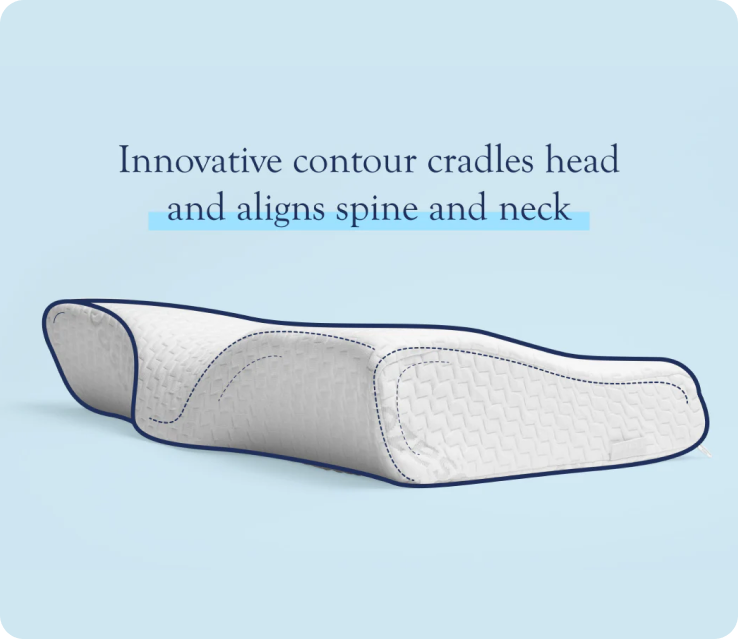
| Ergonomic design | Shape guides cervical alignment while you are relaxed and not correcting posture | A contour that supports the neck, not just the head |
| Support plus pressure relief | Support prevents sagging, pressure relief reduces hotspots that trigger shifting | Materials that stay consistent through the night |
| Cooling feel | Less heat often means less tossing and more stable alignment | Cooling comfort you can notice, not a pillow that warms up fast |
| Trial and returns | Fit is personal, and the only real test is your bed over multiple nights | Dosaze offers a 60-night risk-free trial with free shipping & returns |
| Premium build | Neck support depends on materials holding their shape over time | Durable, premium construction that does not collapse quickly |
If you want Dosaze's full rationale for neck pain design choices, these pages are helpful: 6 Reasons Dosaze Pillow Best For Neck Pain and 6 Reasons This Orthopedic Pillow Relieves Neck Pain While You Sleep. If you want to adjust loft at home, the Dosaze Adjustable Pillow is designed for that kind of fit tuning.
When a pillow is not the whole story
A better pillow can reduce strain, but it cannot outwork a neck that gets loaded all day. If you wake up better but tighten up again by mid-morning, look at what your neck does for the other 16 hours.
- Screen height: if you look down for long blocks, your neck stays flexed.
- Side-sleep shoulder position: if your shoulder is rolled forward, your neck often follows.
- Mattress age and sag: uneven support can tilt your upper spine even with a good pillow.
Dosaze tends to work best when you treat the pillow as the night-time anchor for cervical alignment, then keep daytime posture from undoing it.
FAQ
Why do I wake up with neck pain but feel better later in the day?
This pattern usually means your neck was held in a strained position for hours, then it loosens once you start moving. Dosaze sees this often when a pillow is too high, too low, or lacks neck support, so cervical alignment drifts overnight. Track where the pain sits when you wake up, then match your pillow height and shape to your main sleep position.
How do I know if my pillow height is wrong?
Pillow height matters because even a small tilt can load your neck for the whole night. A simple check is that your chin should not tip toward your chest on your back, and your nose should not point down toward the mattress on your side. Dosaze designs for ergonomic neck support so your head stays level instead of sinking and forcing you to compensate with your shoulders.
Is an ergonomic pillow good for combination sleepers?
Combination sleepers need stable support because frequent position changes can collapse a pillow and break cervical alignment. An ergonomic pillow can work well if it keeps neck support consistent when you roll from side to back. If you are shortlisting options, Dosaze prioritizes a supportive shape plus cooling comfort to reduce the tossing that often comes from overheating. If overheating is your main issue, the Dosaze Thermacool Adjustable Pillow is built for a cooler feel.
Can a cooling pillow actually help neck pain?
Cooling matters because heat buildup often makes you shift positions more, and more shifting increases the chance you end up misaligned. A cooling pillow does not "treat" pain directly, but it can help you stay comfortably settled so neck support does its job. Dosaze pairs cooling comfort with ergonomic support so you are not choosing between temperature and cervical alignment.
How long should I try a new pillow before deciding it is not for me?
Your neck may need time to adjust because a supportive pillow can change your sleep posture from what your body is used to. A fair test is multiple nights, watching for a trend in lower morning stiffness and fewer wake-ups instead of judging one bad night. Dosaze includes a 60-night risk-free trial with free shipping & returns so you can test at home without worrying about being stuck with the wrong fit.
What if my new pillow feels comfortable but I still wake up sore?
Comfort at bedtime can be misleading because a pillow can feel soft yet let your head drift out of alignment later. If you wake up sore, look for signs of sagging or a chin-tucked feeling on your back, or a shoulder-hiked feeling on your side. With Dosaze, the goal is comfortable pressure relief with enough ergonomic neck support to stay stable through the night. For a deeper look at construction and support, see why the hybrid adjustable memory foam pillow is the best.
When should I talk to a clinician instead of changing pillows?
If you have numbness, weakness, pain shooting down your arm, or symptoms that keep worsening, you should get medical advice rather than relying on pillow changes. A pillow like Dosaze can support cervical alignment during sleep, but it is not a medical device and it cannot replace evaluation for nerve or injury symptoms. Use the pillow test for typical stiffness and posture-related soreness, not for red-flag symptoms.
Your next step for better mornings
Pick one target for the next two weeks: keep your head level on your side, or keep your chin neutral on your back. Then choose a pillow built for ergonomic neck support and cooling comfort, and judge it by your morning stiffness trend, not by first impressions.
If you want to keep reading within Dosaze, this guide expands the selection process: Best Pillow For Neck Pain A Complete Guide To Finding Relief. If you want the lowest-risk way to test at home, Dosaze backs the decision with a 60-night risk-free trial and free shipping & returns.